
..........................................................................................................................................................................................................
interviews & features | dvds | equipment | clothing | books | videos
..........................................................................................................................................................................................................obstacles
saturday's guardian newspaper, in its regular long read feature, wrote about the impending pedestrianisation of 0.6 miles of london's oxford street, a change which, the article implies, has been debated almost as long as the present day mayor, sadiq khan, has been alive. however, it appears that, in the case of oxford street, pedestrianisation is not simply a euphemism for the banning of motorised traffic. unlike glasgow's sauchiehall and buchanan streets, both of which have long been pedestrianised, under the impending changes on oxford street, "cars, lorries, vans, taxis, buses, bicycles, e-bikes, scooters will be banned.'
in principal, that seems like a particularly valiant attempt to make life more congenial for oxford street shoppers on two feet, though somewhat at odds with the mayor's ambition "...to create a greener city that is oriented around public health, walking and cycling." however, since anecdotal evidence would suggest that few cyclists currently risk their lives by cycling along oxford street, perhaps it's no great loss.
however, as government and cycling activist groups continue to point out the merits and health benefits of getting about by bike, at the risk of descending into pessimism, it strikes me that there are ill-winds (literally, in some cases) that just might mitigate against wholesale adoption of two wheels as a principal mode of transport. just as several, including yours truly, have pointed out in recent times, the apparent expectation that those who took to the saddle during covid lockdowns, would continue to enjoy life behind bars for the foreseeable, was fundamentally flawed. i distinctly recall pointing out that it would take only the first rains of autumn to persuade the pandemic velocipedinists to once again reach for the car keys. for possibly the first time in my career, i was proved correct.
and it is those very conditions that might exert greater implied pressure to exclude cycling as a pragmatic, economic transport solution/opportunity as the world continues to change.
much has been made recently in media reports, about the government's upcoming advice to maintain around three days' worth of supplies to mitigate aginst what the future might hold. this advice, while mostly thought to be as a result of potential cyber attacks, or russian belligerence towards the west, the prime minister was also moved to include adverse weather, given greater creedence this parrticular weekend by the double whammy of two closely proximitous atlantic storms: austen and the curiously named boelo.
as i write, the latter of those has been strafing this promised land with winds approaching 100kph, accompanied by heavy rain. already a portion of the roofing material has been detached from the bikeshed, and worse is forecast to come on the windy road to midnight. a presentation of humperdink's opera, hansel and gretel by scottish opera has been postponed from 7pm this evening, until 4pm tomorrow afternoon, given the met office's amber wind alert across the period of performance (in the local high school). the length of the opera, including an interval, would have had the audience leave around 10pm, at which point the wind was expected to be reaching between 110 - 130kph, depending on which forecast you believe.
however, even as a cyclist who probably ought to know better, i have written off this weekend in its entirety. not for a minute will my cyclocross bike leave the relative safety of thewashingmachinepost bike shed. and yet, i am one of those cyclists who, over the past forty years, has cultivated the skill of riding in weather conditions about which others would think more than twice. what then of the recent convert, who is attempting to renounce the motor car in favour of the bicycle? granted, my location is not entirely conducive to such an option; on moving to islay and discovering that nobody (literally nobody) else rode a bike for transport, the principal reason i faced was 'the wind'.
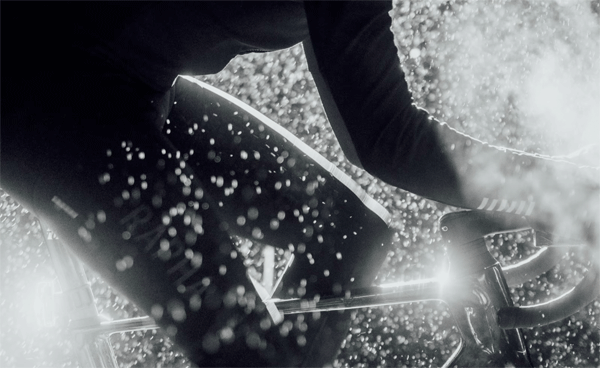
it was a few years before i learned entirely of what they spoke, even though it causes me a lot less inconvenience than it does everyone else. that hasn't stopped several youtube channels producing videos enlightening the great unwashed as to the ins and outs of riding in the rain, riding in the wind or generally, riding in bad weather. i can only assume that these are not specifically targeted to cyclists on scotland's west coast, the majority of whom will be well acquainted with all three outcomes. i do wonder if rapha are aware of the irony of the subject heading of the e-mail that landed in my inbox on thursday; to wit: 'the weather never wins'. much as i'd love that to be true, this particular weekend has proved this to be a complete fallacy.
and if the first named storms of the season can halt those of us well prepared (apparel and tenacity wise) for such conditions, i can only imagine how those less invested in the 'pain and suffering' paradigm will fare. after all, andy burnham did not exclude the prospect of worsening weatheer conditions from his government's advice to stock up on supplies. if meteorology is indeed about to become less user-friendly, don't expect a wholesale switch to the bicycle for transport, no matter the price of a barrel of brent crude.
i should perhaps point out that rapha's marketing missive also included a link to their guide to 'riding in winter'
image: rapha
sunday 25 october 2026
 ..........................................................................................................................................................................................................
virtual reality

as february 2024 followed the first month of the year, apple computer bestowed the world with its first, and so far, only, virtual reality headset, the vision pro. according to the manufacturer's hyperbole, this would "...seamlessly blend digital content with your physical space", claiming that "the era of spacial computing is here", notwithstanding the knowledge that others had already released their own virtual reality headsets.
apple's visual demonstrations of the vision pro's capabilities were particularly impressive, encapsulating as they did, the spheres of entertainment ("transform any room into your own personal cinema - with more pixels than a 4k tv for each eye"), a spacial photo gallery, games and a dedicated travel mode. additionally, apple promised a workspace with 'infinite space', enabled by a mac virtual display, widgets, apple intelligence, all controlled by a magic keyboard and trackpad, '"redefining how businesses run". you can perhaps understand why i used the adjective hyperbole.
however, you will also note that i used the word impressive when describing apple's demonstration of the device's capabilities, but how did those demonstrations translate into actual sales? understandably, apple is somewhat guarded about those numbers; you'll note that it's only when a product acquires substantial sales in excess of those expected, are we provided with reportedly accurate numbers, however, industry estimates lean towards 500,000 - 600,000 units since its launch in february 2024. by comparison, it's understood that the twelve-month production target for the recently released iphone duo is 14 million units.
the purchase price of apple's vision pro is £3,500, a premium of £1,500 over the cost of the base iphone duo (though if you load the duo with every practical option, the price can reach £3,200). to that extent, the lack of comparable sales for the vision pro is not necessarily as a result of the price tag, but might possibly rest on the fact that the device is perceived as heavy, or that the world is not yet ready to immerse itself in a virtual world. either way, the best that can be gleaned from cursory examination of the above two products is that a healthy bank balance is required to acquire either.
and the price of admission to the online world of cycling forms at least a proportionate part of my oft-voiced disdain for the genre. aside from the cost of whichever bike you choose to fasten to your indoor smart trainer, the cost of the latter must be added. admittedly, this can be as little as £300 but rise as far as £2,500 for a wattbike atom, though in the case of the latter, you'd still have spent money on the road bike sitting forlornly in the bikeshed, fortunate if it ever sees the light of day, even on bright, sunny occasions. assuming you opt for the market leader in the indoor, online cycling market (zwift), you'll need to shell out an additional £180 each year to participate in the wonders of watopia.
there's also the possibility that you might require an additional flat screen tv, if only to stifle any complaints from the rest of the family. that's probably another £200 at least, or maybe you'd prefer the ipad option, in which case that's probably £1,000 for the practical minimum (although ipads are available for less). assuming you consider yourself a member of the cognoscenti, after buying yourself a tadej colnago replica, you'll be well north of the cost of a vision pro. however, at the risk of incurring the wrath of the indoor cognoscenti, it's not only the cost aspect that has me disparage the zwifties. that rests predominantly on the fact that riding indoors in front of a arbitrary set of pixels is simply not cycling (and it sure as heck not gravel cycling).
however, if there is a common target of disparagement by the velocipedinal cognoscenti, it's probably golf, commonly regarded as "a waste of a good walk" in truth, there's no satisfactory reason for dissing a sport that nobody forced us to play in the first place. a good many of my friends spend way too much time playing golf, and i'm sure my constant ribbing has gone well past the level of tedious, an implication that i have done my best to ignore. however, it transpires that golfers, far from aiming their spite in the direction of the peloton, have an equivalent of the zwift paradigm from which to extract the michael.
forming a part of the extensive range of products proferred by the garmin corporation, an edifice which many a cyclist has regarded as 'on our side', comes the r50 golf simulator package. this consists of a garmin approach launch monitor, a sim 6 enclosure, a simspace impact screen, a tee turf hitting mat, a benq ah500st short-throw laser projector and the necessary hdmi cable connector. purchased as a package, incurring a £250 discount over purchase of each item separately, the intrepid indoor golfer will need an eyewatering £8,037. and to take full advantage of such garmin largesse, you'll need a room that measures a minimum 3.5m wide x 2.7m high and 5.0m long.
reputedly, the average golf club membership costs £1760, so for the cost of garmin's apparent reality aberration, our hypothetical intrepid golfer could have four and a half years' membership of his or her local golf club, where they can gain the real benefits of real golf in the real outdoors.
at last the zwifties now have their one and only good reason to be smug.
saturday 24 october 2026
..........................................................................................................................................................................................................condescension
one of the problems of teaching pipe band snare drumming to beginners is the apparent ease with which the experienced drummer practises his/her art. it looks deceptively simple to achieve. piping, on the other hand, looks difficult from the get go, an apprehension that is every bit as true as it appears. the intrepid learner will begin on chanter, the part of the bagpipe which points downwards from the bag, and offers the piper the opportunity to play whichever tune has been decreed. unfortunately, if you happen to be in a nearby drum corps, practising alongside on rubber drum pads, accompaniment is fraught with interludes for breathing.
though i believe it is possible to practise circular breathing, so called because as air is blown through the mouth, the practitioner simultaneously breathes in through the nose. a rarefied number of top grade pipers and saxophonists are able to demionstrate this technique during their respective performances, but for what i hope are obvious reasons, this might be a smidgeon beyond the capability of the rank beginner. those interspersed breaths rarely seem to allow the hypothetical chanter players to maintain a recognisable sense of time, thus rendering any localised accompaniment null and void.
committed pipe band drummists will have already sniggered at the included humour, paying attention to the knowledge that, with one or two exceptions, bagpipers below a certain grade, exhibit no recognition of timekeeping whatsoever.
as it transpires, and i know from first-hand experience, drumming is a whole lot harder than it looks, realisation of which inevitably ends in a sense of disappointment and that there is a very high mountain to climb. pipe band drummers, in common with america's dci drum corps, rely entirely on drum rudiments to create the often overtly technical patterns required by both styles of performance. and in order to grasp technical fluency in any and all of those rudiments, it is necessary to practise them slowly and deliberately, only increasing the tempo when mastery allows.
i cannot deny that it's hardly the most exciting way to occupy your time.
given that pipe band snare drums are specifically designed and constructed to offer unparalleled volume in the great outdoors, instruction and practice generally takes place upon a rubber practice pad, a combination of wood and rubber that reputedly approximates the feel of a real drumhead, but actually doesn't. this means that there are no melodies to be learned, and after having played snare drum for more than 55 years, my practice regime sounds little different than that of the beginner, though perhaps a tad faster and smoother. so while the pipers can move onto the goose (an air bag with chanter, but devoid of the three drones) and then a full set of pipes, as their skills improve, an ageing drummer such as yours truly is still confined to a dark corner of the practice room, tapping away in the background.
heaven forefend that percussive sounds interrupt the lengthy bagpipe tuning ritual, apparently designed to be repeated several times per evening.
though it may be a strange admission from a drummer who has been associated with a pipe band since 1992, i'm not actually all that keen on the sound of the great highland bagpipe in the first place. i'm sure that the pipe majors under whom i have worked believe that i'm only joking, but it's true. that does not, however, disavow the notion that playing in a pipe band is anything but hard. to achieve almost perfect harmony between ten pipers and ten drummers throughout a lengthy performance, is arguably harder than playing jazz, rock or country music (delete as applicable).
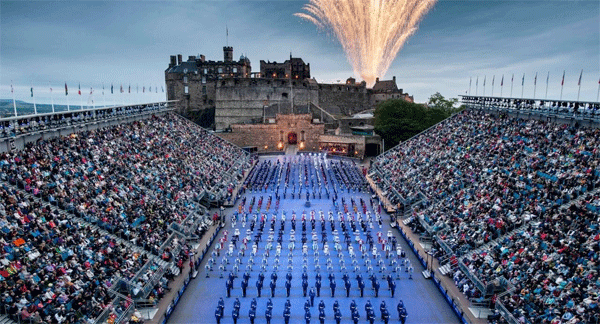
i mention this because it is only a matter of days before tickets go on sale for the grand départ in edinburgh at the start of those three weeks in july 2027. there are apparently 9,000 tickets available to the eagerly constituted. according to the comic's website, the event will begin at 18:.30 on wednesday 30 june on the esplanade outside edinburgh castle and will involve the producers of the annual edinburgh military tattoo. but the comic goes one stage further to enlighten those velocipedinists who may not have previously heard of the edinburgh tattoo. and, in obvious anticipation of cycling weekly's sales completely tanking north of the border, they described it as 'a bagpipes and dance show'.
to place in perspective: the edinburgh tattoo attracts an annual audience in excess of 220,000, averaging almost 9,000 people each evening, and has done so since the 1970s. approximately 30% of that audience hails from scotland, 35% from the rest of the uk and around 35% (70,000) travel from overseas. each season features more than 800 performers and the global tv audience is estimated at 100 million. ticket prices range from £58 to over £216. exclusive dining and hospitality packages are closer to £1,000.
cycling weekly's senior writer and deputy features editor should probably not holiday in scotland and i'd advise that he keep well away from the annual world pipe band championships in glasgow at the end of august.
wednesday 21 october 2026
..........................................................................................................................................................................................................anticipation
we have discussed at length, the fencing of uiskentuie strand by islay estates and the consternation this has caused for the dog-walking population of islay. the strand consists of a 3km stretch of grass and dunes bordering the seaward side of the main road between bridgend village and bruichladdich. in fairness to the estate, it is their land and thus subject to the agricultural demands they wish to place upon it, but prior to the full length, roadside fencing being installed, the ground had accommodated weekend walkers, dog walkers, but disappointingly, also motorhome owners and hirers determined to avoid paying for a hook up at the nearby port mòr campsight in port charlotte. and, due to its location, many of those walkers were guilty of parking their cars pretty much anywhere they saw fit.
the official reason for fencing the area was to encourage breeding of the endangered chough, a member of the crow family, numbers of which have been in decline on islay for a number of years. reputedly they feed on the dung beetles that frequent the cow pats resulting from grazing cattle on the strand, and that, in short, is the principal reason behind the protests against the fence installation. while the sheep which usually graze on that stretch of land are largely untroubled by pedestrians, cattle are another thing entirely. for one thing, they're a lot bigger than you or i, and prone to bouts of belligerence, particularly around dogs, whether on a leash or not. and while i'm happy to ride through a herd of sheep, i'm inclined to remain as far from cattle as is practical.
though there is no need to ride on the grass when heading to debbie's for a bout of froth supping, it's a habit in which i have invested several years, hoping to impress upon passing motorists on the road, that i possess the kind of cyclocross skills about which they can but dream. of course, we all know that is very far from the truth, but there's no real harm in attempting to fool all of the people all of the time. thankfully, whether by design or accident, the estate seems to have taken to moving the cattle to the opposite side of the road at weekends, meaning my cameron mason impersonations can continue unhindered.
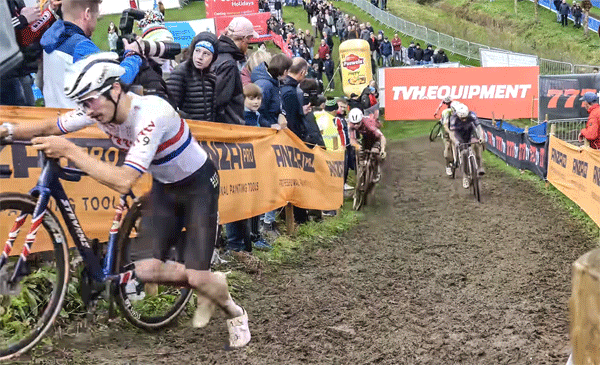
which, i like to think, is a timeous coming together of several related strands (pun unintended). tnt sports has already broadcast its first televised european cyclocross race of the 2026/27 season from meulebeke this past weekend with the opening round of the telenet super-prestige trophy series coming this sunday. that's followed at the end of the month by the first round of the x2o badkamers trofee series, after which we're well and truly down the cyclocross rabbit hole.
but cyclocross is already here.
saturday's race, the berencross from meulebeke, saw the first appearance of former world champion, fem van empel since she took a step back from the sport in the early part of the 25/26 season. and just to add to the joy of watching 'cross once again, those first few laps of the men's race saw the field headed by scotland's cameron mason (though he subsequently finished in 6th place). i have long said that the three grand tours, the spring classics and one day uci road races simply get in the way of the next cyclocross season, and i still believe that to be the case.
it's now time for a real sport.
tuesday 20 october 2026
..........................................................................................................................................................................................................
..........................................................................................................................................................................................................
 ..........................................................................................................................................................................................................
 ..........................................................................................................................................................................................................
as always, if you have any comments, please feel free to e-mail and thanks for reading.
..........................................................................................................................................................................................................
- bikeportland.org
- chris king precision components
- chris king cielo review
- courage bicycles
- dirty pictures - pdxcross
- epic wheelworks
- jordan hufnagel
- tony pereira
- sweetpea bicycles
- sacha white and vanilla bicycles
portland 2009
- scribbly bikes | taliah lempert
- cycling.tv interview
- interview with portland, oregon frame builder, ira ryan
- interview with scots cyclist shane charlton
- ben ingham interview
- pain and suffering in camden town - a visit to rapha
- a visit to cycling.tv
- paul mason of solo clothing interview
- interview with velo news illustrator brintoni
- cross interview with simon burney
- interview with trystan cobbett of rapha usa
- interview with anthony mccrossan of cycling.tv
- interview with jamie smith - author of roadie
- interview with chris distefano of chris king components
- interview with slate olson of rapha usa
- a visit to mosquito bikes, march 2008
- a visit to rapha, march 2008
- a visit to cycle fit, march 2008
- pasculli bicycles
- interview with eurosport commentator david harmon
- interview with 'roadie' illustrator, jef mallett
- interview with brian smith
- christine mclean interview
- robert millar interview
- ernesto colnago interview
- simon mottram interview
- cyclevox interview 2009
- sven thiele interview
- luke scheybeler (rapha) interview
- tour de ville
- richard sachs interview
- a visit to chris king components
- paul fournel interview
- justin spinelli - svelte cycles interview
- daisuke yano - rapha japan
- illustrator/animator richard mitchelson
- yanto barker interview
- a conversation with photographer jeff scher
- morecambe and mcwise at the end of 2009
- portland photographer dan sharp
- sacha white - vanilla cycles
- house industries' rich roat
- tweed run 2010
- cyclefit - macklin street, london
- kara ginther interview
- michael barry & camille mcmillan interview
- a trip on the jura fast ferry
- tim dawson's saddles
- the metamorphosis of velodramatic
- crouching tiger tours
- the rapha bicycle collection
- horizon fitness rt women's racing team
- dave seaman's bike shed
- rapha condor sharp
- introducing cervo rosso clothing
- interview with harth huffman
- interview with herbie sykes
- endura equipe racing team
- interview with bella bathurst
- what a size they are
- an interview with aszure's ashley brown
- michael robertson - velodramatic
- simon rose - pitch n sync
- interview with author mike carter
- craig hardie on cyclocross
- photographer anthony skorochod
- chris grove - performance race art
- rapha focus cyclocross team
- endura team training camp
- jon tiernan locke
- sugar wheelworks, portland, 2012
- chris king precision components 2012
- synaptic cycles bike rental
- craig middleton of onix bicycles
- derek mclay of wheelsmith
- 2012 scottish road race champion, james mccallum
- sweetpea farmers market
- craig ryan of foresta frames indiana
- louise mullagh of patisserie cyclisme
- illustrator andy arthur
- cycle artist james straffon
- sweetpea bikes carbon tactical boom boom
- some words with helen wyman
- glasgow's siempre bicycle cafe
- made in scotland
- jimmy mac's new jersey
- the thin blue stripe - rapha/team sky
- glasgow revolution track meeting february 2013
- designing chris hoy's bike range
- the artwork of artist david atkinson
- ira ryan and tony pereira's breadwinner cycles
- the artwork of peter english
- who the heck are jardine lloyd thompson?
- a conversation with illustrator rebecca kaye
- chris baird's miniature peloton
- a day in the rapha condor jlt team car at the 2013 nationals in glasgow
- team sky photographer scott mitchell's 2013 tour de france
- a word in your ear - matt barbet
- rapha usa's hillary benjamin
- richard sachs team re-design
- endura's move to the big time
- heather dawe's illustrated ride through yorkshire
- a visit to glasgow's pronto gara
- derek mclay's wheelsmith workshops
- rapha travel 2014 - an overview
- robert millar's 1984 kom peugeot bike
- taurus corinto city roadster
- an interview with rapha's simon mottram
- revolights city wheels
- rapha team sky wet bag
- the cycle art of mark howard jones
- san marco aspide carbon protek saddle
- endura roller case kit bag
- san marco aspide carbon protek saddle
- redant precision road bike maintenance
- a day at shand cycles
- the imperialists - a visit to rapha's new london home
- robert millar interview celebrating the 30th anniversary of his kom win
- chris hoy's new bike - shand cycles
- dan mather - for the love of print
- rapha condor jlt at the usa pro challenge 2014
- portland's gladys bikes
- yanto barker interview
- glory days vintage bike hire
- factory v handbuilt wheels
- sunderland's fausto coffee
- an evening with graeme obree
- andy mackie's testa della corsa italian and skye bike tours
- ste johnson's illustrated cards
- brian smith on mtn qhubeka's successes at the 2015 tour de france
- tom southam ds at drapac cycling
- a few words with kristian house
- an interview with rapha's simon mottram (2016)
- the illustrations of eliza southwood
- born in scotland, ridden worldwide
- james dow's chalet de aravis
- an interview with mick tarrant of prendas
- few words with ned boulting about the tour de france
- was this the greatest product launch ever?
- rapha's head of design, alex valdman
- a few words with tom ritchey
- an interview with maratona's simon carr
- pro rider cycling
- a cycling cafe on arran
- the man behind the book - a few words with peter cossins
- a few words with andrew meo of rocket espresso
- rowley's hand-painted custom cyclists
- london-paris: ten years after
- the drive-in; maserati and cycling
- having a cross to bear - richard sachs cyclocross 2017
- rich roat - an appreciation
- caren hartley: one half of isen bicycles
- helen wyman's happy new year
- books for the curious: bluetrain publishing
- xavier lopez and bike basque
- james mccallum's what's your meta
- if you think the spring classics are hard, try scotland
- london-paris: later that same century
- a few words with andy mackie of la corsa italian tours
- illustratively speaking - a quick conversation
- the artist as cyclist-nick higgins
- totally cyced - angus king
- words with isabel best and taz darling about queens of pain
- rapha's world tour education
- rapha's bespoke typefaces
- campagnolo's uk service operation
- 2019 etape loch ness
- a few words with emily chappell
- a few words with artist, oliver brookes
- an interview with kenny pryde
- busy doing nothing - a commentator's life in lockdown
- the cycling poster according to jackie swann
- dave arthur interview
- a few words with author hannah reynolds
- glasgow's pantani brothers ..........................................................................................................................................................................................................
- clothing review | assos airjack 851
- clothing review | assos airprotec bibtights
- clothing review | rapha performance roadwear
- clothing review: |rapha performance roadwear - merino training top
- peugeot cycle jersey
- giro d'italia zipped sweatshirt
- rapha winter cap
- rapha winter jersey
- rapha emergency gilet
- ardbeg winter jacket
- prendas giro d'italia wear
- rapha fixed jersey
- rapha winter tights & bib shorts
- obree, merckx & kelly t-shirts
- gist cycle jersey and shorts
- solo st neith clement sur lie jersey
- rapha limited edition gloves
- cafe de colombia jersey
- apres velo t-shirts
- solo equipe gilet
- prendas ciclismo neoprene overshoes
- campagnolo thermo textran jacket
- solo equipe long sleeve jersey
- prendas windtex stretch winter gloves
- earth wind and rider merino wool jersey
- post hebridean - lightweight softshell jacket, 3/4 bibs and long sleeve jersey
- prendas windtex stretch overshoes
- prendas meraklon oversocks
- rapha long sleeve merino baselayer
- the hebridean review - endura cycle clothing
- rapha condor recycling long sleeve team jersey
- wabi woolens merino jersey
- rapha condor recycling team stowaway
- campagnolo heritage jersey and windjacket
- rapha grand tour gloves and team cap
- how jerseys are made
- rapha gazzetta gilet
- polaris neo shirt
- bruichladdich distillery cycle jersey
- santini twist gel carbon shorts
- opsal sports screen printed organic cotton t-shirts
- endura fs260 pro pro-lites jersey, bib-shorts and socks
- rapha touring shorts
- lake cx400 custom fit shoes
- gage and desoto c-record t-shirt
- showers pass elite 2.0 jacket - part i
- panache lifestyle t-shirt
- rapha silk scarf
- showers pass elite 2.0 jacket - part ii
- rapha new fixed jersey
- rapha cyclocross jersey & bib threequarters
- adidas super pro classic road shoes
- rapha limited edition tweed softshell jacket
- solo maxwell cycles england jersey
- rapha softshell gilet
- rapha belgian kneewarmers
- welcome to great coffee jersey
- rapha winter jersey and winter cap
- endura stealth softshell jacket
- rapha leather town gloves
- endura deluge winter gloves
- endura xtract zip top
- dhb merston long sleeve jersey & rogate thermal bib tights
- rapha merino: fixed baselayer, winter socks & winter collar
- santini threequarter bibshorts
- a variety of buffs
- the crew room bamboo charcoal shirt/baselayer
- white men can't jump colnago cycle cap
- king of the mountain socks
- mavic zxellium | marresi leather road shoes
- walz tartan woollen winter cap
- rapha stowaway jacket 2009
- colomba tricolor long-sleeve jersey
- shutt long-sleeve drywool jersey
- solo luxury merino socks
- rapha tweed cap & race socks
- quoc pham fixed leather shoes
- endura fs260 bib-threequarters
- mavic altium jersey, bibshorts, helium gilet and race socks
- icebreaker merino baselayers
- endura baabaa merino tech jersey
- etxe ondo hilare bibshorts
- le col cycle jersey
- prendas summer mitts
- rapha pro-team mitts
- sue me bamboo/cotton t-shirt
- schlamm wetzikon training jacket
- rapha merino jersey
- rapha cyclocross jersey & bib threequarters
- rapha red softshell & rapha trousers
- rapha waxed cotton gentleman's cap
- prendas new generation long-fingered gloves
- rapha rainjacket and overshoes
- endura dexter windproof gloves and merino socks
- endura baabaa merino flat cap
- rapha long sleeve jersey and merino winter collar
- prendas thermolite and thermocool socks
- rapha bomber jacket
- dhb southsea waterproof jacket
- rapha winter tights & merino hat
- endura baabaa merino armwarmers
- embrocation cycling journal race socks
- le col winter jacket and winter bib tights
- solo possum fur and merino beanie
- le col long sleeve jersey
- dromarti le grande cognac crochet mitts
- river city bicycles merino jersey
- craft elite windstopper l/s jersey & crew neck wool/polyester baselayer
- le col long-sleeve angora wool baselayer
- apolis/rapha transit elite sweater feature
- swobo merino long-sleeve jersey
- galstudio ventoux tweed cap
- rapha pink stowaway
- apolis/rapha transit elite sweater
- icebreaker merino cycling socks
- rapha merino polo shirt
- rapha merino v-neck baselayer
- hincapie sportswear tour lt jacket
- rapha team kit
- rapha womens jersey
- dromarti storica leather shoes
- rapha long-sleeve shirt and merino boxer shorts
- rapha women's stowaway jacket
- derny merino long-sleeve polo shirt, city shorts, & merino socks
- suplest carbon street racing shoes
- ana nichoola curve jacket
- le col mariana s/s jersey and bibshorts
- rapha tweed run merino socks
- swrve clothing
- muxu spanish clothing
- prendas compression socks
- derny city shirt
- rapha workshop apron
- dromarti black and red leather shoes
- rapha long-sleeve polo shirt
- santini unisex slice shorts
- rapha oversocks
- rapha cyclocross jersey & 3/4 bibs
- missionworks dzr rondel shoes
- rapha breton sweater
- rapha + paul smith rainjacket
- rapha ladies softshell and threequarter bib shorts
- rapha softshell trousers
- wabi woolens sports series merino jersey
- rapha track top
- dhb windslam softshell, super-roubaix winter tights, s'cafe aerofit baselayer
- endura equipe exoshell jacket, gloves and overshoes
- rapha softshell winter gloves
- dromarti sportivo leather spd shoes
- dromarti corio long-finger leather gloves
- dromarti gara rosso leather mitts
- outlier four season og pants
- rapha pro team jersey and shorts
- colnago winter jacket and bib tights
- rapha + paul smith windshirt
- rapha enfer du nord armwarmers
- cielo jersey
- cervo rosso national pride jersey and mk2 bibshorts
- cervo rosso merino jersey
- quoc pham leather tourer shoes
- shaun deller cycle cap
- cinelli t-shirt
- rapha jeans
- dhb aeron shorts and race socks
- rapha ladies jersey and gilet
- road holland den haag jersey
- rapha brevet jersey
- renner sport gilet and armwarmers
- hultra hi visibility s/s jersey
- endura team replica kit
- endura uber bibshorts
- velobici merino cardigan
- endura pak a jak showerproof jacket
- velobici merino armwarmers
- rapha cyclocross pro-team bibshorts
- rapha cyclocross pro-team jersey
- santini metis breezeflow jacket
- armwarmers, oversocks & coolmax socks
- rapha city riding socks
- rapha merino roll neck jumper
- hultra ventoux windproff softshell
- cervo rosso intermedio jacket and winter bibshorts
- endura equipe cashmere socks
- endura equipe bib-knickers
- madison stellar ii waterproof jacket
- cervo rosso armwarmers and legwarmers
- velobici ride 't'
- prendas air tunnel gloves and overshoes
- bbb mistralshield windproof jacket
- capo padrone thermal jacket
- cafe du cycliste yolande long sleeve jersey
- vulpine clothing's nick hussey, softshell jacket and merino jersey
- dromarti la grande 2 mitt
- rapha sleeveless pro team base layer
- craft active rain jacket
- vulpine epic cotton rain jacket
- rapha grand tour shoes
- de feet yellow wool gloves
- mavic hc h2o waterproof jacket
- solo retro tec jersey and armwarmers
- rapha lightweight sportwool jersey
- cervo rosso strada doppio 2.0 jacket
- rapha classic bibshorts
- rapha etape act two jersey 2012
- showers pass double century ex waterproof jacket
- endura urban range polo shirt, stretch trousers and argyle socks
- velobici van dapper road jersey and shorts
- vulpine merino polo shirt
- cervo rosso corsa s3 jersey
- showers pass skyline softshell jacket
- endura bowmore single malt s/s cycle jersey
- rapha hardshell waterproof jacket
- prendas winter hat
- vulpine long sleeve t-shirt
- le col b3 winter jacket and bibtights
- carbonaut breakaway jersey
- vulpine long-sleeve polo shirt
- vulpine lightweight harrington jacket and tailored trousers
- glacier cyclocross gloves
- prendas primaloft winter socks
- solo winter jacket, merino baselayer and merino collar
- prendas cordura oversocks
- cervo rosso ibrido jacket
- route clothing t-shirts
- cafe du cycliste, marie josette s/s jersey
- rapha team sky winter cap
- rapha s/s trade team jersey
- this is...cambridge merino cap
- prendas leisure jacket
- rapha bordeaux-paris jersey
- castelli gabba jersey & nano-flex armwarmers
- castelli gabba jersey & nano-flex armwarmers when wet
- solo kilmory jersey
- vulpine merino alpine jersey
- vulpine button merino jersey
- cafe du cycliste henriette s/s jersey
- rapha/raeburn windjacket
- cafe du cycliste cotton cycling cap
- rapha teamsky kids' wiggo jersey
- condor extreme polka dot socks
- rapha transfer trousers
- dmt marathon 2.0 offroad shoes
- cafe du cycliste loulou armwarmers
- prendas super-roubaix gloves
- aldi l/s winter jersey
- endura adrenaline race cape
- fred perry bradley wiggins range track jacket & merino sweater
- endura jetstream l/s jersey
- endura equipe exo waterproof gloves
- vulpine epic cotton raintrousers
- prendas aquatex overshoes
- showerspass outdry waterproof gloves
- castelli nan-flex bibknickers
- this is cambridge blood, sweat & gears cap
- rapha merino mesh l/s baselayer
- solo 3/4 thermal bibshorts
- rapha winter glove system
- shutt winter performance jacket
- rapha winter socks 2013
- endura luminite waterproof jacket
- rapha city riding merino gilet
- look mum no hands podium boxer shorts
- rapha transfer jacket
- shutt vr ltd edition tweed cap
- look mum no hands headwear
- cafe du cycliste heidi jacket
- showers pass crosspoint windgloves
- claret vulpine softshell gilet
- hackney gt alpine green long sleeve cycle jacket
- kora shola yakswool l/s baselayer
- this is cambridge urban sprinter cap
- showers pass crosspoint waterproof socks
- rapha & raeburn l/s henley and quilted jacket
- meccanica off-bike clothing
- vulpine/oliver spencer blazer
- rapha trade team jerseys
- endura movistar replica team kit
- tribesports gent's cycle jersey
- showers pass elite pro jacket
- endura movistar team replica l/s jersey
- stolen goat ltd ed. fausto coppi t-shirt
- lecol pro s/s jersey and bibshorts
- bits and bobs from prendas ciclismo
- rapha lapelled jacket and s/s polo shirt
- proviz nightrider jacket and waterproof trousers
- rapha commemorative pantani jersey
- tic panache fluoro dots cycling cap
- cafe du cycliste antoinette bibshorts and baselayer
- ardbeg's new retro jersey
- rapha king of pain jersey
- this is cambridge sunflower tdf cap
- santini peugeot retro bibshorts
- rapha climbers jersey
- endura equipe infiniti bibshorts and helios comp jersey
- vulpine ultralight quilted thermal jacket
- proviz reflect360 waterproof jacket
- vulpine dogtooth merino silk socks
- rapha deep winter hat
- rapha long pro team socks and merino stripe socks
- this is cambridge grimpeur cap
- rapha reversible city riding jacket
- rapha crew neck merino t-shirt
- cucu barcelona s/s jersey
- prendas ciclismo leisure polo shirt
- rapha pro team bibtights with pad
- endura stealth-lite 2 waterproof bib-tights
- le col rain jacket
- hackney gt alpine bobble hat
- showers pass skyline winter cap
- rapha city range merino button shirt
- isadore merino gloves
- castelli alpha jacket
- this is cambridge omloop winter cap
- showers pass bodymapped baselayer
- mavic cosmic wind jacket
- velobici merino ribbed collar and white tip merino gloves
- rapha pro team softshell
- cervo rosso strada 2.0 l/s jersey
- portland design works 'cross beanie
- prendas de vlaeminck t-shirt
- hoy vulpine jersey and shorts
- rapha softshell baselayer
- rapha data print pro-team jersey
- ashmei softshell jacket
- ashmei merino/carbon s/s jersey
- rapha 2015 trade team jerseys
- vulpine gill waterproof jacket
- endura classics jersey
- café du cycliste louise s/s jersey
- rapha cima coppi s/s jersey, essentials case and cap
- house industries merino vélo jersey
- this is cambridge tom s/s jersey cap and socks
- milltag top bonk schleppers jersey and cap
- showers pass torch socks
- fat lad at the back lanterne rouge l/s jersey
- this is cambridge panache confortare cap
- wonderful socks
- ashmei bibshorts
- santini team z s/s jersey & bibshorts
- the athletic socks, jersey and cap
- prendas super roubaix fluoro gloves
- prendas aqua light fluoro overshoes
- le col hc s/s jersey
- rapha tom simpson jersey and cap
- prendas santini peugeot mashup t-shirt
- rapha long-sleeve club jersey
- showers pass cascade track pants
- rapha thermal classic bibshorts
- vulpine thermal gilet
- rapha cyclocross l/s jersey, cap and socks
- aldi l/s jersey, tights and socks
- showers pass bamboo/merino henley sport
- rapha lombardia l/s jersey and socks
- this is cambridge 1-in-7 cap
- rapha pro team gloves
- aldi l/s merino baselayer
- hoy vulpine winter bib tights
- proviz pixelite softshell race jacket
- rapha loopback trousers
- rapha cotton twill city riding trousers
- prendas aqualight gloves
- showers pass little crossover kids' rainjacket
- endura freezing point overshoes
- red dots scottish winter cycling cap
- svelte clothing s/s jersey and classic bibshorts
- this is cambridge waxed cotton cycling cap
- cafe du cycliste charlotte softshell jacket, jeanna rain bibshorts and lolou legwarmers
- mavic ksyrium pro thermo kit
- vulpine softshell gloves
- this is cambridge pink omloop winter cap
- rivelo winnats bibtights, langcliffe waterproof jacket and symonds winter gloves
- svelte long-sleeve heritage jersey
- rapha merino winter collar
- rapha pro team softshell 2015
- showers pass spring classics waterproof jacket
- rapha shadow jersey and bibshorts
- endura fs260-pro sl thermal windproof jacket
- rapha core s/s jersey & bibshorts
- rapha brevet thermal gilet
- rapha classic jersey ii
- velobici continental l/s jersey
- rapha brevet bibshorts
- svelte l/s merino baselayer
- osloh crank trousers
- rapha city riding wool jacket
- rapha brevet windblock jersey
- castelli perfetto s/s weatherproof jersey
- la passione bibshorts, legwarmers and l/s winter jersey
- snek winter cap
- lumo herne hill harrington jacket
- john smedley merino jig sweater and merino hugh sweater
- rapha 'rivals' merino cycle jersey
- galibier velo ultimate foul weather gilet
- rivelo s/s peaslake jersey and homister bibshorts
- la passione pdp summer jersey
- prendas ciclismo 20th anniversary s/s jersey
- this is cambridge hors categorie s/s cycle jersey, socks & cap
- rapha pro team windjacket
- hilltrek greenspot double ventile jacket
- magliamo merino wool molteni l/s jersey
- rapha shadow armwarmers + kneewarmers
- n+1 cycling t-shirts
- rapha core l/s team wiggins jersey
- showers pass club shoe covers
- vulpine urban cycling jeans & merino boxers
- rapha cyclocross long-sleeve jersey
- rapha mips helmet
- shutt vuelta winter jacket
- rapha merino stand collar windproof jersey
- this is cambridge s/s baselayer
- hilltrek greenspot double ventile jacket - getting it wet
- endura pro sl bibtights
- rapha commemorative peace race jersey and game
- cafe du cycliste lucette gilet
- specialized deflect reflect hybrid jacket
- rapha classic winter jacket
- cafe du cycliste mid-season gloves
- wabi woolens winter weight jersey
- rapha shadow long-sleeve jersey
- rapha festive 500 jersey and core range waterproof jacket
- dexshell biking socks
- rapha brevet thermal jacket
- dexshell thermfit neo gloves
- maratona classics jersey
- rapha classic bibshorts ii
- endura pro sl bibs ii
- rapha shadow blazer
- showers pass atlas reflective jacket
- rapha pro team bibshorts ii
- rouleur + velominati rule#5 s/s jersey, bibshorts, socks and t-shirt
- rapha packable backpack
- louison bobet softshell gloves
- louison bobet bibshorts, long-sleeve and short-sleeve jerseys
- t-labs stelvio t-shirt
- rapha fausto coppi merino jersey
- velobici premgripp and merino socks
- rapha pro-team lightweight gilet
- louison bobet porticcio 69 merino pullover and letouquet74 merino cardigan
- cafe du cycliste boubou collection zahira diamant s/s jersey
- rapha classic crochet mitts
- rapha lines pro team flyweight jersey
- shutt vr custom jersey and pro bibshorts
- arrivee intermediate l/s jersey
- hilltrek greenspot single ventile lightweight jacket
- snek merino armwarmers and lightwieght merino cycling cap
- rocket espresso s/s jersey and bibshorts
- endura movistar team issue gilet and l/s jersey
- this is cambridge men's bibshorts
- rapha colombia kom s/s sportwool jersey
- new ardbeg celtic cycle jersey
- assos r.s. sturmprinz evo waterproof jacket
- this is cambridge a bloc long-sleeve jersey and socks
- hilltrek greenspot single ventile jacket - getting it wet
- snek merino kneewarmers
- rapha ultramarine pro team softshell
- endura pro sl thermal jacket
- rapha city riding range insulated sweatshirt
- endura pro sl thermal jacket
- assos habutightsmille thermal bibtights
- rapha pro team thermal l/s baselayer
- rapha classic rainjacket ii
- giessegi redoute winter bibtights
- t-labs road riding t-shirt
- rapha pro-team insulated jacket
- rapha quarter zip reflective knit jersey
- showerspass trailhead merino/bamboo hooded sweatshirt
- pedal ed nachi waterproof jacket
- pedal ed essential jersey and team winter bibtights
- assos mille gt spring/autumn l/s jersey
- pedal ed kaido l/s merino jersey
- rapha check windjacket
- q36.5 hybrid que l/s jersey, s/s baselayer, wolf bibshorts and merino socks
- assos t-equipe evo bibshorts
- rouleur cycle clothing collection
- this is cambridge omloop l/s jersey, mesh baselayer, thermal bibshortsm kneewarmers and socks.
- rapha transfer hoodie.
- endura long-sleeve movistar team jersey
- rapha limited edition gavia collection
- haramaki - japanese body warmer
- hommage au velo bahamontes lightweight climbing jersey
- prendas/santini bordeaux-paris jersey & cap
- hilltrek hebridean ventile gilet
- dexshell ultralight waterproof socks
- endura fs260 adrenaline cape and threequarter shorts
- rapha explore range, insulated goose-down jacket
- assos mille gt hashoogi winter jacket
- prendas/santini peugeot bp inverted long-sleeve jersey
- rapha classic bibtights
- rapha milano-roma collection
- rapha tweed softshell
- prendas pro rain overshoes
- showers pass crosspoint waterproof gloves
- campagnolo c-tech winter jacket
- frahm utility field jacket
- velobici rene l/s jersey
- velobici rene thermal bibshorts
- ashmei bibshorts
- this is cambridge omloop rain/windcape
- assos equipe rs bibshorts
- endura apparel cleaner and re-proofer
- rapha core range cargo bibshorts
- endura humvee shacket
- prendas cordura oversocks
- this is cambridge omloop rain/wind gilet
- santini/prendas greg lemond l/s agrigel/adr/bottechia jersey
- prendas lisboa rain cycling cap
- rapha pro-team lightweight shadow jacket
- rapha explore winter cargo bibtights
- café du cycliste petra gilet
- rapha + gore-tex explore hooded pullover
- prendas primaloft cupron socks and winter thermolite socks
- endura pro sl primaloft jacket ii
- albion cycle clothing rain jacket
- rapha pro team insulated gore-tex jacket
- prendas/santini vetements z l/s jersey
- rapha+gore-tex explore hooded pullover
- rapha pro-team road shoes
- rapha pro-team training jersey 7 pro-team training bib shorts
- robert millar/pippa york t-shirt
- endura pro sl bibshortst
- rapha special edition belgian country jersey
- prendas ciclismo - omloop van vlaanderen
- vulpine long and short-sleeve polo shirts
- btr waterproof hi-viz waterproof jacket
- endura hummvee chino shorts with liner
- pearson cycles greg coulton illustrates s/s baselayer
- ashmei breton jersey and cycle bib shorts
- this is cambridge yellow tour socks
- prendas/santini watneys red barrel s/s jersey and cap
- ritchey cycling socks
- dexshell lightweight overshoes
- craft fuseknit s/s baselayer
- rapha core long-sleeve jersey
- prendas omloop van vlaanderen sleeves baselayer
- rapha classic winter gore-tex jacket
- rapha pro team bibshorts ii
- rapha sonic collection
- velobici cobalto thermal jersey and thermal bibshorts
- prendas shell peugeot cap
- endura urban luminite 3 in 1 jacket ii
- prendas/santini peugeot shell michelin s/s jersey
- endura xtract roubaix l/s jersey
- rapha long-sleeve calssic jersey ii
- le col hors categorie bibshorts ii
- vulpine merino alpine l/s jersey
- prendas super roubaix deluxe gloves
- sole active thin insole
- endura custom kit pro sl l/s jersey
- rapha explore lightweight jacket
- rapha gs imperial sportwool s/s club jersey, bibshorts and cap
- tic-cc hc short-sleeve jersey
- vulpine organic cotton tee
- vulpine omnia cycling jeans
- endura fs260 thermo bibknickers
- endura pro-sl three-season jacket
- quoc pham mono ii road shoes
- souke sports l/s jersey, bibtights and thermal jacket
- endura freezing point ii overshoes
- endura mt500 burner clipless offroad shoes
- endura gv500 reiver s/s jersey and bibshorts
- showers pass basecamp merino hoodie
- endura gv500 waterproof jacket
- rapha brevet s/s jersey
- rapha brevet gore-tex paclite plus jacket
- vulpine ultralight quilted gilet
- vulpine men's merino v-lux neck sweatshirt
- quoc weekend sneaker - part one
- quoc weekend sneaker - part two
- rapha powerweave bibshorts
- rapha trailwear technical t-shirt
- rapha trailwear gore-tex infinium jacket
- endura pro sl waterproof shell jacket
- rapha pro team training bibtights
- soukesports graphene l/s fleece jersey, lightweight windproof gilet, winter bibtights and padded winter gloves
- rapha men's trail merino long-sleeve t-shirt
- rapha men's explore gore-tex jacket
- showers pass cloudburst hoodie
- megmeister drynamo l/s baselayer
- souke cargo bibshorts
- uncle pete's handmade casquettes
- rssc sports s/s cycling jersey and bibshorts
- rssc sports l/s cycling jersey and bibtights
- equipment review: | carbonsports lightweight wheels
- equipment review: |fi'zi:k pave saddle
- equipment review: |handlebar camera mount
- thewashingmachinepost colnago c40hp review
- the bicycle as art | taliah lempert
- tour of britain start 2006
- 2006 braveheart ride
- schwalbe ultremo tyres
- ortlieb sling-it
- catlike whisper and kompact pro helmets
- on-one il pompino fixed wheel
- colnago clx
- science in sport nocte
- srm power crank from cylepowermeters.com
- fsa ceramic bearing jockey wheels
- lightweight ventoux carbon wheels
- colnago c50 2007
- fibre-lyte carbon chainrings
- vittoria 30th anniversary shoes + vista pedals
- fulcrum racing one wheels
- eddy merckx chm carbon + wheelsbike 2000s
- fibre-lyte carbon jockey wheels
- rapha fixed backpack
- mavic r-sys carbon spoked wheels
- oval concepts r700 stem and r710 classic bars
- muc-off optix lens cleaner
- brooks swallow leather saddle
- lumie bodyclock light
- ride of the falling rain 2008
- pro-lite piemonte cyclo-cross frame
- ultimate pro-ultralight bicycle repair stand
- rebecca charlton's review: alan a-matrix
- effetto mariposa giustaforza torque wrench
- fsa k-force carbon compact handlebars & os-99 stem
- rapha musette
- chris king classic cross wheelset
- eddy merckx racing alloy
- nokia n82 gps phone & sportstracker software
- independent fabrication featherlight
- garmin edge 705 gps unit
- sportique active body products
- sportique body soap
- sportique century riding cream & deodorants
- fixie inc. betty leeds steel race bike
- bonk breaker energy bars sportique warming up cream and cooling cream
- sportique massage oils
- vittoria revo kxs twin tread tyres
- nokon gear and brake cable sets
- knog gator front light
- chain-l no.5 - huile de chaine
- museeuw mf5 carbon/flax frame
- brompton p-type folding bicycle
- schwalbe ultremo 'r' road tyres
- alchemy goods courier bag
- mule bars
- carbonsports lightweight rd
- trp r960 caliper brakes
- colnago cx-1
- singular peregrine
- independent fabrication club racer fixed gear
- flip ultra video camera and sport mount
- miniature cyclists
- mavic race sl ti pedals
- focus variado expert
- cyclepowermeters powertap rear wheel
- chris king cielo review
- mavic cosmic carbone slr
- shimano di2 review
- fsa sl-k pro carbon compact chainset
- zero g titanium brake calipers
- muvi micro digital video camera
- colnago clx centaur
- squirt dry lube
- crud roadracers mudguards
- bikefood
- hides
- 2010 colnago ace
- muc-off cleaners and dry lube
- ta specialites 42 campag replacement chainring
- reynolds assault carbon clincher wheels
- cyclo tools workshop tyre lever
- bike box alan
- garmin edge 500 gps
- chris king cielo - the story begins
- a graze box of healthy snacks
- sleepathlete pro-sound pillow
- park tools frame fit pump
- full wood fenders
- two'n'fro claqs
- bikefood carbo powder and munchie bars
- dromarti strada lugged steel frame
- a2z components campagnolo single speed convertor
- 9bar energy bars
- iphone/ipod bike doctor app
- crud roadracers mark two
- lazer helium helmet
- 2011 campagnolo centaur ergopower levers
- the legacy of john boultbee brooks part 3 - colt saddle
- van nicholas titanium skewers
- purple harry's bike cleaning products
- mavic k10 wheel/tyre system
- motorex lubricants and sprays
- sram red groupset
- clif choc chip bar and shotblok
- rapha skincare range
- purple harry's bike cleaning range
- ibis hakkalugi cyclocross bike
- high five zero tabs and 4:1 carb/protein powder
- moonlights rechargeable lights
- edge16 magnetic bottle 'cage'
- crank brothers eggbeater and candy pedals
- respro hump waterproof backpack cover
- pedros workshop vise whip
- andystand
- zimbale leather saddle and saddlebag
- lezyne floor drive track pump
- continental speed king cyclocross tyres & chris king cyclocross wheels
- bbb microboard computer
- demploi canvas belt bag
- aszure team issue carbon bike
- traitor luggernaut three-speed
- vittoria open pave cg tyres
- rapha tour de france cd
- enve 25 carbon sprint wheels
- mavic r-sys slr exalith wheels
- san marco mantra saddle
- cole c24 lite wheels
- trp 970sl brake calipers
- milani acciaio puro columbus xcr road bike
- trion-z magnetic therapy bracelet
- trp eurox magnesium cantilievers
- giro aeon helmet
- rapha seat pack
- bbb digiboard cycle computer
- colnago world cup 2.0 cyclocross bike
- garmin 200 gps cycle computer
- vittoria diamante pro radiale clinchers
- swift little dear bar-bag/saddle bag
- mavic plasma slr helmet
- ibis hakkalugi black lung
- nightrider lights
- beloved every day bicycle
- rapha race bag
- purple harry sanitising spray
- rapha summer embrocation
- shand cycles stoater
- sugar wheelworks ghisallo wooden rimmed wheels pt.1
- sugar wheelworks ghisallo wooden rimmed wheels pt.2
- colnago clx 3.0 di2
- ventoux event bag
- sugar wheelworks/chris king r45 ceramic wheelset
- nuun hydration tablets
- wheelsmith race23 wheels
- wheelsmith race23 wheels part two
- green oil white dry wax lubricant
- shand cycles skinnymalinky
- green oil eco bucket
- bike parka
- nilox 'foolish' hd action video camera
- condor bivio x cyclocross bike
- trakke mule waxed cotton messenger bag
- lezyne mega-drive headlight
- rapha post shave lotion
- morgan blue soft chamois cream
- morgan blue bike wash and polish
- morgan blue warming oil
- morgan blue chain cleaner and race oil
- kask vertigo helmet
- colnago c59 disc
- endura airshell helmet
- bakewell soap co. deep muscle relief rub
- dz nuts inheat embrocation
- rx sport prescription rudy project exowind cycling glasses
- dz nuts inheat embrocation
- portland design works bird cage
- purple harry travel pack
- ism adamo attack saddle
- purple harry wet lube
- rapha liveried pinarello dogma k
- festina tour of britain edition chronograph
- portland design works 3wrencho
- c originals sv888 helmet
- trek domane 5.9
- >colnago acr
- giro air-attack helmet
- gu energy slated caramel gel
- ursa major three musketeer traveler shaving kit
- rolf prima ares 4 carbon wheels
- protecht surface coatings
- fsa k-force cantilever brakes
- dz nuts bald shaving cream
- matrix waxy maize and scottish oats carb powder
- rolf prima vigor alpha wheels
- portland design works alexander graham bell
- ventoux gym bag
- silicon tidds
- wheelsmith race 24 wheels part 1
- 2013 cervelo r3
- unich mini-pump
- aerozine titanium wheel skewers
- mavic zxellium road pedals
- pdw aether demon tail light
- loksak mobile phone case
- a set of rouleur goodies including mark cavendish model
- wheelsmith race 24 wheels in 'cross mode
- axiom annihilateair track pump
- brooks cambium c17 saddle
- bridge street saddlebag
- green oil eco sponge
- ritchey torque key
- salsa celtica - the tall islands
- biologic pango folding helmet
- cervo rosso softshell case
- dmt vega road shoes
- poc octal road helmet
- shand cycles phat stoater
- bike repair app
- osmo hydration products
- multipower energy bars
- sugru flexible silicon rubber
- purple harry super sponge
- cielo racer stem
- kali phenom helmet
- bryton 20+ cycle gps
- secret training products
- ventoux training camp bag
- portland design works ninja pump
- honey stinger organic chews
- challenge limus cyclocross tyres
- fast forward f6 carbon clincher wheels
- brainy bike lights
- 24 bottles stainless steel water bottle and porta bottiglia
- purple harry rider care range
- shand rohloff stoater
- frog 55 hybrid kids' bike
- brooks brick lane panniers
- bellroy waterproof leather travel wallet
- green clean bike cleaner
- crunchy peanut butter clif bars
- chapeau cyclist's coffee
- anamaya meditation iphone app
- rapha cyclocross shoes
- look mum no hands stainless steel hip flask and cage
- rapha climbers shoes
- bodyglide products
- pedros yellow tyre levers
- mavic cxr helmet
- bar fly garmin handlebar mount
- cycling stars trump card game
- brooks cambium c15 saddle
- pedros synlube
- colnago c60
- pedros green fizz bike cleaner
- portland design works lars rover front light
- feedback sports velo hinge
- feedback sports velo hinge
- massif central tdf poster
- nixfrixshun chain lube
- richard mitchelson's cycling wallpaper
- manual for speed 2015
- the king of scotland's ibis hakkalugi disc
- tesco outdoor clothing wash and spray proofer
- clement las cyclocross clincher tyres
- pedros chain pig
- challenge gravel grinder 38mm 'cross tyres
- cherryactive concentrated montmorency cherry juice
- fox cycling online cycle training
- giro empire road shoes
- muc off hydro dynamic chain lube
- cyclops magnetic turbo trainer
- dromarti classic leather road shoes
- tern verge x-18 folding bicycle
- wheelsmith aero 38 wheelset
- sunwise hastings cycling glasses
- wheelsmith aero 38 wheelset part ii
- rapha/bang & olufsen h6 headphones
- flexiseq joint lubrication therapy
- muc off fabric protect
- brooks cambium c15 carved saddle
- mavic cxr ultimate road shoe
- frog bikes tadpole balance bike
- rapha sunglasses
- rapha rucksack
- giro vr90 offroad shoes
- colnago clx 2015
- portland design works owl cage
- vel components multi-tool with co2 adaptor
- ritchey classic series bars, stem, seatpost and saddle
- aldi bikemate bicycle toolkit
- withings activité pop watch
- selle san marco regal saddle
- led lenser b5r front light and b2r rear
- clement crusade pdx cyclocross tyres
- wickens & soderstrom bike cleaner
- bicycling magazine's emoji keyboard
- crank brothers candy 7 pedals
- muc off luxury chamois cream
- wheelsmith aero disc wheelset
- ridley x-ride 20 cyclocross bike
- break fluid blended ground coffee
- quoc pham hardcourt shoes
- crank brothers quattro cleat adaptor
- brooks carbon rail cambium c13 saddle
- crank brothers candy 7 pedal update
- ridley x-ride 20 update review
- specialized recon mixed terrain shoes
- specialized prevail road helmet
- axiom blastair mini pump
- specialized crux e5 x1 cyclocross bicycle
- cycliq fly6 rear light and hd video camera
- challenge baby limus cyclocross tyres
- crank brothers candy #7 pedals final review
- challenge strada bianca 700x33c road tyres
- green oil eco grease in a tube
- ortlieb6 plus, handlebar bag and seatpost-bag
- specialized awol elite adventure bike
- rapha + apidura bike packs
- portland design works bindle rack
- flexiseq active joint lubrication
- selle royal ta+too interchangeable saddle
- unior 1655fh multi-tool
- wd40 bicycle products
- unior tyre levers
- showers pass utility backpack
- lizard skins clear frame protection kit
- specialized crux elite cyclocross bike
- installing a campagnolo groupset
- campagnolo potenza groupset: the prologue
- lizard skins camouflage 2.5mm bar tape
- campagnolo potenza groupset: going for a ride
- specialized turbo cotton clinchers
- four months on a specialized crux elite
- wickens and soderstrom no.3 drivetrain lube
- wickens and soderstrom no.6 bike polish
- ritchey wcs xc clipless pedals
- restrap camouflage musette bag
- ritchey barkeeper levers
- campagnolo potenza; how's it doing?
- 100 climbs mobile app
- rearviz armband mirror
- six months on a specialized crux elite
- specialized sequoia elite
- ortlieb bikepacking bar pack and seatpack
- plan bee anti-chafe and embrocation
- schwalbe one pro tubeless tyres and wheelsmith ascent tubeless wheelset
- laura zabo's upcycled road tyre belts
- schwalbe one pro tubeless tyres and wheelsmith ascent tubeless wheelset part 2
- quoc pham 'night' road shoe
- specialized roubaix comp
- on the rivet chamois cream
- schwalbe one pro tubeless tyres and wheelsmith ascent tubeless wheelset part 3
- limar ultralight+ helmet
- rawvelo energy bars
- feedback sports bike tools
- more than a couple of weeks on a specialized roubaix comp
- veloeye bicycle theft protection
- ride skincare sunscreen and recovery moisturiser
- green oil spray lube
- campagnolo sarto carbon road bike
- hexlox anti-theft system
- chrome industries cardiel orp backpack
- fairbairn fabrication fangs
- chrome industries cinelli barrage cargo backpack
- sven cycles pathfinder light
- brooks weatherproof cambium c17 saddle
- chamois butt'r original and eurostyle
- wheelsmith pave wheelset
- campagnolo chorus groupset part one
- mavic yksion tubeless 28mm tyres
- campagnolo chorus groupset part two
- ritchey logic frameset
- neil pryde bura part two
- portland design works gravity tail light
- portland design works daybot tail light
- bicycle maintenance guide app for ios
- giro empire vr70 knit offroad shoes
- rapha classic saddle
- specialized turbo vado electric bicycle
- endura pro sl road helmet
- compass 700 x 28c chinook pass tyres
- brooks pickwick cotton backpack
- chinook pass tyres part two
- specialized turbo vado 2.0 - the real review
- crankalicious science friction chain lube
- ritchey micro road pedals
- rapha for apple macbook 13" sleeve
- coloral stainless steel water bottle
- campagnolo record twelve-speed bike build
- crankalicious pineapple spray was and frame sealant
- campagnolo record twelve-speed
- fassa bicycle protection
- rapha waterproof top tube pack and small seat pack
- campagnolo record twelve-speed
- specialized allez sprint comp disc
- ashmei domestique gin
- ritchey wcs ergomax alloy handlebar, wcs c220 84d stem and wcs pavé bar tape.
- goodyear eagle tubeles 700 x 30c tyres.
- specialized turbo tubeless tyres 700x28c.
- rapha explore shoes.
- specialized roval 64mm tubeless-ready disc compatible carbon wheels.
- ritchey classic zeta wheelset.
- specialized allez sprint comp disc, long-term review.
- brooks cambium organic light saddle.
- chater-lea grand tour pedals.
- ritchey chicane stem.
- rapha roll top backpack.
- zilfer cycling/activity wallet.
- rene herse hurricane ridge 700x42 gravel tyres.
- campagnolo bora wto carbon wheelset.
- limar air-pro and air master helmets.
- donnelly strada lgg 700x28c road tyres.
- basso diamante road bike-disc version.
- showers pass rainslinger waterproof hip pack.
- revolube bicycle chain lubricant.
- chater lea grand tour pedals - the story so far.
- campagnolo bora on and bora wto wheelsets.
- see.sense ace light set.
- revolube - part two.
- donnelly strada lgg 28mm road tyres
- basso diamante - part two
- clug bicycle storage solution
- revolube: the story so far
- bicycle quickguard
- ritchey echelon road pedals
- ritchey echelon road pedals - update
- btr waterproof saddle wedge
- kinesis jo burt signature bar tape
- btr waterproof bar bag
- bend 36 chamois cream
- kool-stop tyre bead jack
- rene herse steilacoom gravel tyres
- pirelli cycle-e wt winter tyres
- pirelli cycle-e wt winter tyres part two
- essence outdoors epicon glasses
- shapeheart smartphone handlebar mount
- mystery ranch hip monkey + in-and-out 19
- rene herse chinook pass road tyres
- jack the rack
- ritchey single-bolt carbon seatpost
- tyre glider
- hutchinson tundra 700 x40c gravel tyres
- hutchinson tundra 700 x40c gravel tyres part two
- green oil chain degreaser and dry chain wax
- green oil agent apple extreme degreaser
- condor cycles handbuilt wheelset
- squirt lube long lasting and low temperature versions
- green oil eco spray lube
- green oil bike armour
- challenge grifo cyclocross clincher tyres
- granite rock'n'roll torque wrench kit
- ritchey cabrillo saddle
- ritchey comp xc offroad pedals
- cycplus as2 pro max tyre inflator
- green oil massive brush ..........................................................................................................................................................................................................
- real peloton issues 1 and 2
- pantani-the pirate dvd bromley video
- the eddy merckx story - the greatest cycling champion. double dvd set - bromley video
- the brit pack double dvd set - bromley video
- scott coady's cobbles baby dvd
- cy-yo cycle yoga dvd
- battle of the bikes, obree/boardman - bromley double dvd set
- the final hour - bromley dvd
- ultimate cyclist cd/download. josh horowitz
- quest 2 dvd
- red zinger/coors classic 3dvd set
- flying scotsman - the graeme obree movie
- detour de france dvd
- 23 days in july dvd (1983 tour de france)
- le velo de ghislain lambert
- it's the tour baby! deux - scott coady
- the athlete's guide to yoga dvd - sage rountree
- the road to roubaix - masterlink films
- imperfection is perfection - richard sachs, framebuilder
- the high life - a life in the year of robert millar
- detour - the movie
- klunkerz dvd - the birth of mountain biking
- sportsfreund lotsch
- bicycle dreams - a movie by stephen auerbach
- pure sweet hell - a cyclocross dvd
- a ride with george hincapie
- d'acciaio - a film by ben ingham
- the cyclocross meeting - brian vernor
- brian robinson - an alan pascoe film
- breaking away
- cycle of betrayal - the shay elliot story
- the collective anthology
- jeremy powers cross camp
- mark cavendish: born to race
- beryl burton - racing is life
- l'ultimo chilometro
- janapar movie
- bespoken cycle music by johnny random
- pantani: the accidental death of a cyclist
- a film about coffee
- for the love of mud a film about cyclocross
- alf engers. a film by ray pascoe
- dummy jim - a film by matt hulse
- battle mountain - graeme obree
- time-trial a film by finlay pretsell featuring david millar
washingmachinepost interviews and features
clothing reviews
clothing reviews above
..........................................................................................................................................................................................................equipment and other reviews below
dvd reviews
book reviews
- spain - the trailrider guide
- bikie
- the yellow jersey guide to the tour de france
- a century of the tour de france by jeremy whittle
- the official tour de france centennial 1903 - 2003
- flying scotsman - the graeme obree story
- riding high-shadow cycling the tour de france by paul howard
- the ras - the story of ireland's stage race by tom daly
- bicycling science 3 - david gordon wilson
- one more kilometre and we're in the showers
- food for fitness - chris carmichael
- 101 bike routes in scotland - harry henniker
- park tool big blue book of bicycle repair - calvin jones
- roule britannia - william fotheringham
- marco pantani - john wilcockson | lance armstrong - daniel coyle
- michael barry - inside the postal bus
- a peiper's tale - allan peiper | man on the run, (marco pantani) - manuela ronchi
- the tour de france - graeme fife
- viva la vuelta - the story of spain's favourite race - adrian bell & lucy fallon
- les nomades du velo anglais - tony hewson (plus extract)
- velopress special: andy pruitt's cyclist's medical guide | lennard zinn's book of road bike maintenance | lennard zinn's book of mountain bike maintenance
- workouts in a binder for indoor cycling - velopress
- the death of marco pantani. a biography by matt rendell
- heart zones cycling - the avid cyclist's guide to riding faster and farther
- the hour - sporting immortality the hard way. michael hutchinson
- a question of balance. a collection of 24 postcards by jean jacques sempe.
- le grand pelerinage - histoire d'une passion cyclomythique. jack fournier & bruno moreau.
- cycling's golden age: heroes of the postwar era 1946-1967 owen mullholland. velopress
- ascent. the mountains of the tour de france by richard yates
- cycletouring in france - a cicerone guide
- cycling in the french alps - eight classic cycle tours by paul henderson. a cicerone guide
- the tour de france 2006 by john wilcockson
- cycling for health and fitness (revised and updated edition). ed pavelka.
- the six day bicycle races - america's jazz-age sport. peter joffre nye.
- base building for cyclists - thomas chapple
- fausto coppi - jacques augendre
- in search of robert millar - richard moore
- the beautiful machine - graeme fife
- flandrien - stephan vanfleteren
- gracie goat's big bike race
- sports nutrition for endurance athletes - monique ryan
- the racing bike book - haynes publishing
- two wheels by matt seaton - guardian books
- city cycling by richard ballantine - snowbooks
- cyclocross training+technique by simon burney. velopress
- paris roubaix - a journey through hell. velopress
- rouleur photography annual and exhibition 2007
- the tour de france - graeme fife
- cyclist's training diary - joe friel
- the athletes guide to yoga - sage rountree
- the rapha guide to the road climbs of the pyrenees - graeme fife
- sex, lies and handlebar tape - the jacques anquetil story by paul howard
- road bike maintenance by guy andrews
- roadie by jamie smith
- the eagle of the canavese by herbie sykes
- touring in switzerland - a cicerone guide
- we might as well win - johan bruyneel and bill strickland
- heroes, villains and velodromes - chris hoy and britain's track revolution - richard moore
- the tour is won on the alpe - jean-paul vespini
- blazing saddles - matt rendell
- tour climbs - chris sidwells
- riding the storm - geoff thomas
- tomorrow we ride - jean bobet
- the bicycle book - wit, wisdom & wanderings
- campagnolo - 75 years of cycling passion
- rouleur photography annual 2008
- a dog in a hat - joe parkin
- tour de france - the history, the legend, the riders - graeme fife
- cycle for life - nicole cooke
- in pursuit of glory - bradley wiggins
- ten points - bill strickland
- the full cycle - vin denson
- les p'tits velo - janol apin
- weight training for cyclists
- inside stories - a collection of rapha labels
- fallen angel: the passion of fausto coppi. william fotheringham
- paterek manual for bicycle framebuilding - tim paterek
- bicycling for women - gale bernhardt
- hello sailor - michael hutchinson
- pedaling revolution - jeff mapes
- custom bicycles - a passionate pursuit. elliot & jablonka
- graham watson's tour de france travel guide
- a racing cyclist's worst nightmare - tony hewson
- the daily telegraph book of the tour de france
- lance - john wilcockson
- cutting your car use - anna semlyen
- cyclocross - chris hinkle
- olympic gangster - matt rendell
- bicycle diaries - david byrne
- the time crunched training system - chris carmichael
- chris hoy - the autobiography
- ride with me nyc - roos stallinga
- fixed gear culture
- rouleur photo annual 2009
- the wrong kind of snow - woodward/penn
- cicerone guide to cycle touring in ireland - tom cooper
- brompton bicycle - david henshaw
- cicerone guide to traversing the massif central - alan castle
- two wheels on my wagon - paul howard
- the athlete's plate - adam kelinson
- take a seat - dominic gill
- the rapha guide to the great road climbs of the southern alps - graeme fife and pete drinkell
- it's all about the bike - rob penn
- come and gone - joe parkin
- when we were young and carefree - laurent fignon
- 100 greatest cycling climbs - simon warren
- lapize ...now there was an ace - jean bobet
- tour de lance - bill strickland
- bikesnobnyc - eben weiss
- cyclopedia - william fotheringham
- the lost cyclist - david v herlihy
- where to ride in london - nick woodford
- the custom road bike - guy andrews
- the spring classics - velopress
- the peloton - timm koelln
- pocket rocket - steve joughin
- on tour - bradley wiggins & scott mitchell
- brian robinson, pioneer - graeme fife
- ten poems about bicycles - candlestick press
- cyclepedia - michael embacher
- cycling in the peak district - chiz dakin
- vintage people on bicycles
- drink smoke flanders - chris milliman
- maglia rosa - herbie sykes
- wide eyed and legless- jeff connor
- slaying the badger - richard moore
- sky's the limit- richard moore
- the cyclist's friend- chris naylor
- the bicycle book - bella bathurst
- pedalare! pedalare! - john foot
- how i won the yellow jumper - ned boulting
- hell on two wheels - amy snyder
- racing through the dark - david millar
- shay elliot - graham healy & richard allchin
- mud, sweat and gears - ken and maureen nichols
- one man and his bike - mike carter
- cyclosportive - chris sidwells
- excerpt from the obree way - graeme obree
- a bit of an all rounder - john coulson
- salsa for people who probably shouldn't - matt rendell
- team 7-eleven - geoff drake
- the belgian hammer - daniel lee
- bicycle travel journal - nigel peake
- past present future - condor cycles
- nicholas roche - life in the peloton
- bianchi: a bicycle alone in the lead - daniele marchesini
- rouleur photo annual 2011
- the obree way - graeme obree
- the cyclist's guide to hillclimbs on scottish lowland roads
- how cav won the green jersey - ned boulting (e-book)
- richard sachs, bicycle maker - nick czerula
- unsurpassed: the story of tommy godwin - godfrey barlow
- merckx: half man, half bike - william fotheringham
- bike tribes. a field guide to north american cyclists - mike magnuson
- argyle armada - mark johnson
- eddy merckx; the cannibal - daniel friebe
- another 100 greatest cycling climbs - simon warren
- land's end to john o'groats by nick mitchell
- field of fire - jeff connor
- cycle chic - mikael colville andersen
- cycle style - horst a. friedrichs
- born to ride - stephen roche
- cutting edge cycling - hunter allen, stephen cheung
- just ride - grant petersen
- fitness for geeks - bruce w perry
- the dirtiest race in history - richard moore
- cycling in the hebrides - richard barrett
- around ireland on a bike - paul benjaminse
- cycling guide to southern england - harold briercliffe
- the bike owners handbook - pete drinkell
- the road to valour - aili and andres mcconnon
- the eagle of toledo - alasdair fotheringham
- on my own two wheels - malachi o'doherty
- 100 best bikes - zadid sardar
- velo - paul fournel and jo burt
- bike! - richard moore and daniel benson
- mud, snow and cyclocross - molly hurford
- the secret race - tyler hamilton and daniel coyle
- bike craft, design, innovation - the oregon manifest
- between the lines - victoria pendleton and donald mccrae
- raleigh 125th anniversary book
- reg harris - robert dineen
- merckx 525 - velopress
- behind the stare - geoff proctor
- made in england - sowter, feather, peshcke
- bradley wiggins: tour de force - john deering
- allez wiggo - daniel friebe
- the srampagmano tales - scarlett parker
- my time - bradley wiggins
- 21 days to glory - official team sky tour 2012
- coppi - herbie sykes
- everyday bicycling - elly blue
- the cycling anthology issue one
- the bicycle reader - jack thurston
- cycle space - steven fleming
- inside out - tom southam and camille mcmillan
- ride 2: bicycle fiction
- the complete guide to sports nutrition - anita bean
- the rhine cycle route - mike wells
- dennis horn - racing for an english rose - peter underwood
- fitter, further, faster - charlton, hicks and reynolds
- hellingen; a road cyclist's guide to belgium's greatest cycling climbs - simon warren
- paris-roubaix: the inside story - les woodland
- lost lanes - jack thurston
- maglia rosa second edition - herbie sykes
- twelve months in the saddle - john deering & phil ashley
- tour de france 100 - richard moore
- racing hard - william fotheringham
- tour de france 100 official treasures - carlton publishing
- cycling anthology volume two - birnie, bacon
- 100 years of the tour de france - quercus publishing
- riding hard - william fotheringham
- the race against time - edward pickering
- easy rider - rob hayles
- hunger - sean kelly
- va va froome - david sharp
- the rules - velominati
- golden stages of the tour de france - allchin & bell
- haynes advanced road bike maintenance
- land of second chances - tim lewis
- the culinary cyclist - anna brones
- 30 year cycle - chris boulton
- complete road bike maintenance - guy andrews
- the waltonwood journal
- steel soul - andrew g smith
- l'album d'eddy
- 101 - bradley wiggins & scott mitchell
- cyclo cross photo book - balint hamvas
- the long race to glory - chris sidwells
- the elite bicycle - gerard brown and graeme fife
- it's all about the bike - sean yates
- classic cycling race routes - chris sidwells
- project rainbow - rod ellingworth
- life cycle - gary sutherland
- rapha city guides
- the waltonwood journal no.2
- the cycling anthology no.3
- the pain and the glory - team sky
- rouleur centenary tour annual 2013
- reading the race - jamie smith
- wheelmen - albergotti & o'connell
- pocket road bike maintenance - guy andrews
- at speed - mark cavendish
- viva la vuelta - lucy fallon and adrian bell
- the girl's guide to life on two wheels - cathy bussey
- ordinary - john bradshaw
- a bicycle ride in yorkshire - heather dawe
- the monuments - peter cossins
- racing weight cookbook - matt fitzgerald & georgie fear
- racing weight cookbook - matt fitzgerald & georgie fear
- faster - michael hutchinson
- get on your bike - rebecca charlton, robert hicks & hannah reynolds
- lanterne rouge - max leonard
- gironimo - tim moore
- the veteran's guide to gearing up for your ride - tom allen
- the road cyclist's companion - peter drinkell
- 100 greatest cycling climbs of the tour de france - simon warren
- yoga for cyclists - lexie williamson
- the complete history of the world's greatest cycle race - marguerite lazell
- reckless, the life and times of luis ocana - alasdair fotheringham
- on the road bike revised edition - ned boulting
- etape - richard moore
- merckx 69 - tonny strouken & jan maes
- shadows on the road - michael barry
- the complete book of the tour de france 2014 edition - feargal mckay
- climbs and punishment - felix lowe
- the cycling anthology number four
- amigo - nando boers & pedro horillo
- the climb - chris froome
- bike fit - phil burt
- cycle of lies - juliet macur
- eric's big day - rod waters
- kings of pain - rapha
- ocana - carlos arribas
- a clean break - christophe bassons
- the loyal lieutenant - george hincapie
- the road headed west - leon mccarron
- cyclocross 2013/2014 photo album - balint hamvas
- along the med on a bike called reggie - andrew sykes
- the race against the stasi - herbie sykes
- pro cycling on $10 a day - phil gaimon
- two days in yorkshire - pave publishing
- the moselle cycle route - mike wells
- how to be a cyclist - john deering & phil ashley
- great british cycling - ellis bacon
- the moselle cycle route - mike wells
- transport, climate change and the city - hickman & banister
- roads were not built for cars - carlton reid
- ray's mtb indoor bike park - johnathan allen and ray petro
- cycling anthology volume five
- infographic guide to cycling - roadcyclinguk
- bike mechanic - guy andrews & rohan dubash
- 101 damnations - ned boulting
- goggles and dust - velopress
- the great fatsby - elden nelson
- bicycling around the world - jeurissen & johnson
- the danube cycleway vol. one - mike wells
- eat bacon, don't jog - grant petersen
- 20 classic sportive rides in south east england
- hinault - ruben van gucht
- to hell on a bike - iain macgregor
- between worlds - andrew welch
- cycling climbs - nigel peake and claire beaumont
- eat sleep cycle - anna hughes
- bernard hinault - william fotheringham
- cyclogeography - jon day
- alpe d'huez - peter cossins
- the hebrides - peter edwards
- the grand tour cookbook - hannah grant
- kings of the road - robert dineen
- a corinthian endeavour - paul jones
- vélochef - henrik orre
- rapha's mondial magazine
- the great boffo - frank dickens
- the yellow jersey club - ed pickering
- cyclocross 2014/2015 - balint hamvas
- beyond the finish line -philipp hympendahl
- a year in the saddle - giles belbin
- the racer - david millar
- the cycling anthology volume six
- the bolt supremacy - richard moore
- the world of cycling according to g - geraint thomas
- the man who made things out of trees - robert penn
- everybody's friend - peter cossins
- shoulder to shoulder - velopress
- my hour - bradley wiggins
- journey- ben ingham
- the mamils a to z - wilson & rickett
- the danube cycleway vol 2 - cicerone guides
- cycling in the hebrides - cicerone guides
- lost lanes wales - jack thurston
- ventoux-bert wagendorp
- connected - matthias schneider
- zinn and the art of road bike maintenance - lennard zinn
- the bicycle colouring book - shan jiang
- grand tour - richard mitchelson
- lands end to john o'groats - nick mitchell
- art of the jersey - andy storey
- shut up legs - jens voigt
- africa solo - mark beaumont
- the great bike race - geoffrey nicholson
- cycling in the lake district - richard barrett
- triumphs and turbulence - chris boardman
- magnum cycling photography - guy andrews
- the cyclist's bucket list - eliza southwood
- circus - camille mcmillan
- the invisible mile - david coventry
- the cyclist who went out in the cold - tim moore
- boulting's velosaurus - ned boulting
- greg lemond. yellow jersey racer - guy andrews
- river rhone cycle route - mike wells
- reinventing the automobile - mitchell, borroni-bird, burns
- from bicycle to superbike - hadland & burrows
- crapper cycle lanes - david whelan
- brooks compendium
- walking the speyside way - alan castle
- dead reckoning: the photo book
- around the world in eightly days - belbin & seex
- the climbs of south-west england - simon warren
- the men of paris-roubaix - max leonard
- the haywire heart - case, mandrola, zinn
- bike nation - peter walker
- giro d'italia - colin o'brien
- steadfast-my story - lizzie armitstead
- giro d'italia - colin o'brien
- a man and his bike - wilfried de jong
- cycling climbs of scotland - simon warren
- giro 100 - herbie sykes
- higher calling - max leonard
- indurain - alasdair fotheringham
- the hardmen - velominati
- ask a pro - phil gaimon
- butcher, blacksmith, acrobat, sweep - peter cossins
- tom simpson - andy mcgrath
- bike boom - carlton reid
- the time crunched cyclist - chris carmichael & jim rutberg
- the cycling cartoonist - dave walker
- spain to norway on a bike called reggie - andrew sykes
- mrs flying scotsman - anne obree
- simon's cycle shorts - simon bever
- three weeks, eight seconds - nige tassell
- the descent - thomas dekker
- cycling climbs of north-east england - simon warren
- cycling the lancashire cycleway - jon sparks
- chasing the rainbow - giles belbin
- cycling climbs of north-west england - simon warren
- cycling science - cheung & zabala
- anquetil. alone - paul fournel
- rainbows in the mud - paul maunder
- woods. a celebration - robert penn
- duffs fantastic cycling gizmos - graham high
- gravel cycling - nick legan
- cycling podcast - moore, birnie & friebe
- the ronde: inside the tour of flanders - edward pickering
- sunday in hell - william fotheringham
- the all new cyclist's training bible 5th edition - joe friel
- copenhagenize - mikael colville-andersen
- full gas - peter cossins
- the call of the road - chris sidwells
- the wind at my back - paul maunder
- getting started in road cycling - guy andrews and laura quick
- american pro - jamie smith
- cartes du tour - paul fournel
- the road cycling performance manual - nikalas cook
- london to paris - mike wells
- racing bicycles - nick higgins
- the wild atlantic way and western ireland - tom cooper
- coast to coast across lancashire - rachel crolla
- around the world in eighty days - mark beaumont
- building the cycling city - melissa & chris bruntlett
- cycling lôn las cymru - richard barrett
- the theory of type design - gerard unger
- my world - peter sagan
- i like alf - paul jones
- queens of pain - isabel best
- rich mitch 'legends' takenotebook
- peaky climbers. paul mcintosh with anna hughes
- the road book - a cycling almanack - boulting, kelly
- the tour according to g - geraint thomas
- rapha handbook 02 longer rides - jo burt
- cicerone 50th anniversary - kev reynolds
- cycling the canal de la garonne - declan lyons
- pantani was a god - marco pastonesi
- cycling the camino de santiago - mike wells
- pedro delgado. a life on the pedals
- outdoor adventures with children - rachel crolla and carl mckeating
- the beast, the emperor and the milkman - harry pearson
- 100 greatest cycling climbs of italy - simon warren
- mind is the ride - jet mcdonald
- the secret cyclist
- need for the bike - paul fournel
- chasing lines - james mclaren
- rough stuff fellowship archive
- cycle touring in wales - richard barrett
- the yellow jersey - peter cossins
- one way ticket - jonathan vaughters
- magic spanner - carlton kirby
- the self sufficient cyclist - guy kesteven
- cycling anatomy (2nd edition) - shannon sovndal
- viva la vuelta - fallon & bell
- the greatest. the times and life of beryl burton - will fotheringham
- cycle touring in northern scotland - mike wells
- where there's a will - emily chappell
- the power of pink annual - rapha/blutrain
- exploring off-road - helen wyman
- navigation. techniques and skills for walkers (cyclists) - pete hawkins
- navigation. techniques and skills for walkers (cyclists) - pete hawkins
- the grand tour files 2019 - pete linsley
- the medal factory - kenny pryde
- colombia es pasion! - matt rendell
- lost lanes north - jack thurston
- balmamion - herbie sykes
- mountains. epic cycling climbs - michael blann
- the bicycle clip diaries - nick raistrick
- gears for queers - melton and cooper
- cycling hadrian's cycleway - mckeating/crolla
- northern line 2021 calendar
- mountains according to g - geraint thomas
- ride inside - friel and rutberg
- ride britain - simon warren
- raincoats are for tourists - isabel best
- la course en tete - will fotheringham et al
- being gary fisher - guy kesteven
- slow rise - robert penn
- the road book 2020 - ned boulting
- end to end - paul jones
- bespoke - tom bromley
- pennine bridleway - hannah collingridge
- a cylcist's guide to the pyrenees- peter cossins
- the art of cycling - james hibbard
- war on wheels - justin mccurry
- the midlife cyclist - phil cavell
- from a to b. a cartoon guide to getting around by bike - dave walker
- land's end to john o'groats - richard barrett
- big rides - kathy rogers/marcus stitz
- cycling the reivers route - crolla and mckeating
- signs of life - stephen fabes
- vuelta skelter - tim moore
- a brief history of motion - tom standage
- desire, discrimination,determination -marlon lee moncrieffe
- exponential -azeem azhar
- 1001 cycling tips - hannah reynolds
- more rough stuff
- the road book 2021 - edited by ned boulting
- cycling the elbe cycling route - mike wells
- god is dead. the rise and fall of frank vandenbroucke - andy mcgrath
- cycling the ruta via de la plata - john hayes
- gravel rides scotland -ed shoote
- the break - steve cummings
- jan ullrich - daniel friebe
- great british gravel rides -markus stitz
- beryl - jeremy wilson
- climbers - peter cossins
- the dot - lachlan morton
- the sound of the machine - karl bartos
- traffic-free cycle trails south east england - nick cotton & kathy rogers
- the northern line cycling calendar 2023
- britain's best bike ride - walsh & reynolds
- chased by pandas - dan martin
- two wheels good - jody rosen
- the road book 2022 5th edition - ed. ned boulting
- the brompton: engineering for change. will butler-adams
- a brief history of pasta. - luca cesari
- offroad heroes - rapha editions
- the monuments updates - peter cossins
- 100 greatest cycling climbs of spain - simon warren
- coffee first, then the world - jenny graham
- the cycling bible - chris sidwells
- bikepacking scotland - markus stitz
- sticky bottle - carlton kirby
- riding with the rocketmen - james witts
- bikepacking wales - emma kingston
- the glasgow wheelers -kenny pryde
- 1923 - ned boulting
- the bicycle wheel - jobst brandt
- peugeot classic bicycles - long & claverol
- jobst brandt - ride bike. isola press
- gravel rides lake district - andrew barlow
- the maurice burton way - maurice burton & paul jones
- the cycling chef on the go - alan murchison
- le grand tour on a bike called wanda- andrew sykes
- king of sports reissue - peter ward mbe
- life in the peloton - mitch docker and tom southam
- gravel rides peak district - hetty kingston
- ride across america - simon parker
- angel of the mountains - paul maunder
- kings of pain - rapha editions
- the extra mile - rapha editions
- dear hugo - herbie sykes, rapha editions
- gravel rides south west england - katherine moore
- gravel rides cairngorms & perthshire - markus stitz
- arrange disorder - richard sachs
- the accidental tour-ist - ned boulting
- the escape - pippa york and david walsh
- handcrafted bicycles - christine elliot & david jablonka
- pogacar: unstoppable - andy mcgrath
- gravel rides loch lomond & the trossachs - markus stitz
- cycling climbs of scotland (2nd edition) - simon warren
- gravel rides edinburgh, fife & the lothians - markus stitz
- lost lanes scotland. jack thurston
- cycling addiction. phil cavell
- great scottish bike rides. dave barter