
..........................................................................................................................................................................................................
build it and they will come
it's a hard conundrum to reconcile. government and local councils would have us believe that they are cash-strapped, the latter due to reduced funding from central government and the former due to ever-increasing expenditure and lowered tax receipts. granted, when you take note of the large international corporations with remarkably convoluted tax arrangements, seemingly guaranteed to ensure very little of it reaches the coffers of her majesty's revenue and customs, they may well be correct. either way, the reduced services we all appear to be receiving for our annual council tax would largely point to a funding crisis of some sort or another.
yet, almost on a daily basis, i have sight of press releases attesting to grant funding received by local organisations, often for what appear to be less than necessary projects. and how often have you taken note of arts council logos appended to advertisements and cd covers? i have recollection many years ago of a scottish jazz trio who flew to new york to record a well-funded album at a renowned nyc studio, yet the finished product has never been released.
our local leisure centre was provided with funding to purchase an electric-powered mountain bike. in itself, that seems relatively innocuous, but the conditions of that same funding prevents them from receiving any money in recompense for use by interested parties. the last i heard it was lying unwanted and unloved midst the water pipes under the swimming pool. i was also party to a musical experiment which received funding for recording of a live concert on condition that the recording was not offered to the paying public.
i'm definitely not saying that arts funding is a pointless exercise, but some of the accompanying restrictions do leave many questions unanswered. yet, when there appears to be a demand for specific services or infrastructure, there are the inevitable protestations that the coffers are empty.
2016 revealed that car sales figures in the united kingdom had reached an all-time high, with 2.69 million of the little blighters registered, showing a year-on-year increase of 2%. though the society of motor manufacturers and traders expect sales in 2017 to diminish by between 5-6%, that is really of no nevermind, because the nation's roads are currently stretched to bursting point as it is. and it is something of a tautology to state that any increase in the number of vehicles on britain's roads is likely to lead to a subsequent increase in traffic accidents including fatalities.
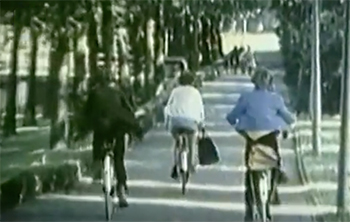
as we all know from reading the dailies and the cycling press, more and more of those fatalities and serious injuries are happening to cyclists, road-users who mostly fulfil the position of second or third class citizens. as evidence for the latter, i would cite the all but laughable sentences or fines handed out by the judiciary to motorists blatantly guilty of having killed or maimed members of the cycling public.
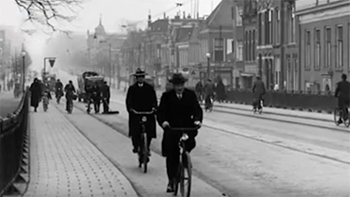
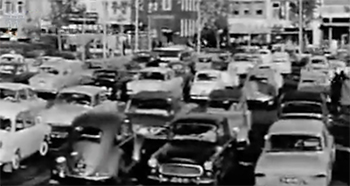
most of the above is not good news, but it is old news. so why have britain's cyclists and pedestrians allowed this situation to happen, when others such as those in holland appear to have proceeded in a different and ultimately safer direction? after the second world war, the dutch saw a substantial increase in their average income, leading to an inevitable increase in their acquisitive powers. spending increased including the money spent on motor vehicles, leading eventually to unnacceptable levels of congestion and deaths on dutch roads as government spending centred on catering to more and more motorists in their cities.
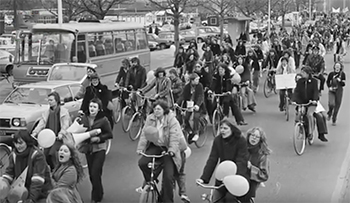
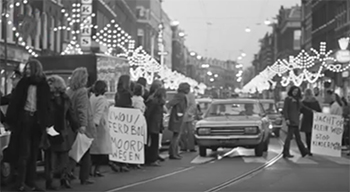
it may have simply been the serendipitous arrival of contributing factors, but protests by a large proportion of the dutch public, alarmed and irate at the number of child deaths on the roads and the encroachment of increased road building, combined with a downturn in the economy and the middle east engineered fuel crisis, persuaded dutch politicians to sit up and take notice.
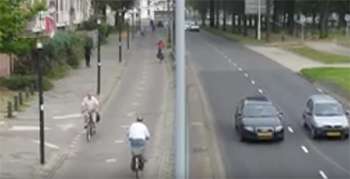
in modern-day holland, while the bicycle may not be king, it certainly has aspirations towards the throne. each and every inner-city or road development has to take cycling into serious consideration. the people of amsterdam have effectively reclaimed their city and their impressive cycling infrastructure has led to a substantial increase in the number of dutch cyclists. these are not the sort of cyclists we'd expect to join us on the sunday ride, but in truth, that's precisely the way it ought to be. aside from any other consideration, ten blokes on skinny tyres and bendy bars on a sunday morning are never going to persuade argyll and bute council's cash-strapped roads department that our presence demands a network of cycle paths around the principality.
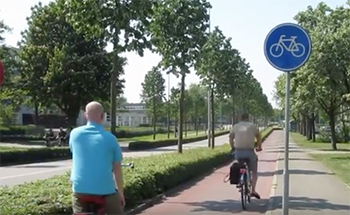
but if around half of our 3,000 plus population were to renounce the car and travel daily by bicycle, something would have to happen. extrapolate that across the nation and despite our impending departure from europe, britain's cyclists could ride as safely and economically as our dutch counterparts. granted, it's a chicken and egg situation: many who would potentially cycle are discouraged from so doing by the number of cars on the roads and the lack of any cyclepath infrastructure to support those aspirations. yet without more cycling, nobody's going to bother aquiescing to the demands of the few.
but if the dutch people and their government can achieve cycling nirvana with little in the way of apparent animosity between them, i see no real reason why it can't work over here. the only real question is why it hasn't worked up till now and why we keep buying so many flipping cars?
how the dutch go their cycle paths
thursday 2 february 2017
 ..........................................................................................................................................................................................................