
..........................................................................................................................................................................................................
collaboration
a matter of a kilometre or so past the tiny village of bridgend, as you head south towards bruichladdich and port charlotte, there is a noticeable change in road surface, one that has seen heavy wear and displays large patches of black asphalt below. the worn top coat was applied (there's another less worn section one kilometre farther along the same road) as a foil to the sudden spate of cars that appeared to be leaving the road on this particular corner including, at one point, a police vehicle. motorists' complaints rested on accusations of negative camber, one that was effectively pushing them in the direction of the ditch alongside.
during the period outlined above, i was a motor car owner and often had need of traversing that very same stretch of road while teaching photoshop to a book publisher in the village of port charlotte. i can honestly say that never once did i find my motor car in any danger of leaving the road, predominantly because i never ever drove faster than 40 mph. i tend to think that the voices of complaint were to be heard from those who drove a tad faster. in mitigation, however, the modern-day motor car, no matter the price tag applied to the windscreen, continues to isolate both driver and passengers from their immediate environment. where once it would have been an audible aid to gearchanging, it is currently all but impossible to hear the engine at all, often leading to a grave misapprehension as to the nature of one's speed.
the vehicles that left the road on the corner under discussion were undoubtedly driving too fast either for the road surface, their driving abilities or a combination of both. however, rather than accept this as a rather obvious fact, the roads department was forced to lay a hi-grip surface to allow those with a heavy right foot to continue to take the corner at the speeds they felt was their inalienable right. i'm sure there are examples of this sort of situation all across the country.
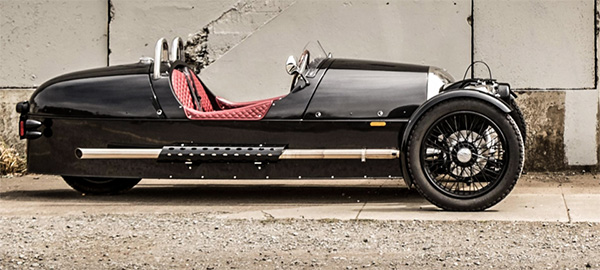
there was a time, of course, when drivers were less cossetted in their soundproof booths. times in which they could relate to their immediate environment, whether 'twas windy or wet, when there may have been wet leaves (or barley) on the road surface and were more at one with their surroundings. it's still possible to acquire that style of motor car, perhaps most notably from the range offered by britain's morgan motors. with a current range that includes a three-wheel, classic looking vehicle, cars such as these likely still appeal to the driver who carefully chooses to wear thin leather driving gloves to grip a wooden or leather-bound steering wheel. one who delights in the variation of road camber and surface quality to be found across the uk. these individuals are not, almost by definition, motorway drivers.
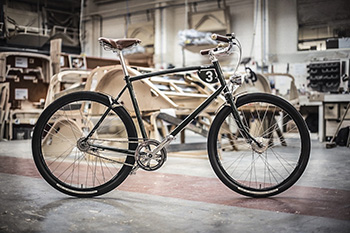
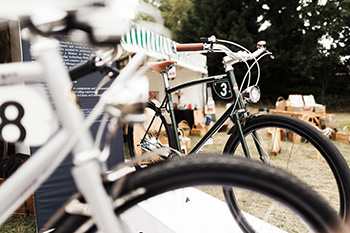
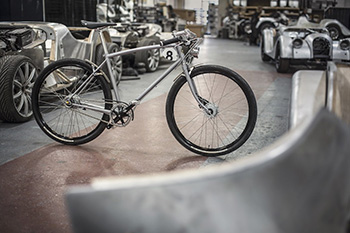
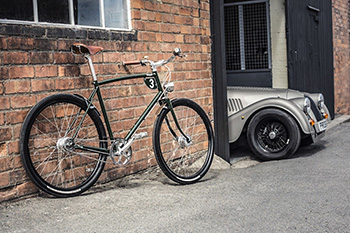
i was almost tempted to say, earlier in this conversation, that cars such as those from morgan most closely approximated the sheer joy of riding a bicycle, albeit with a tad more, fossil-fuel derived, power. in an obvious attempt to second-guess and outwit my simile, morgan cars have brazenly collaborated with another british manufacturing stalwart, pashley bicycles, to produce two, limited edition, morgan-themed bicycles: number 5 and number 8. both feature fillet-brazed steel, reynolds 631 frames, handbuilt in pashley's stratford-upon-avon workshops, the former with a sturmey-archer three-speed hub and the former, a shimano nexus eight-speed hub.
the order book for the first thirty of these bicycles is currently open at london's velorution, almost sensibly priced at £1495 for the british racing green pashley-morgan 3 or £1595 for the pearl grey pashley-morgan 8. if this is as close as you'll ever get to owning a morgan (the three-wheeler begins at £33,000), i'd click over to velorution sooner rather than later.
monday 1 october 2018
 ..........................................................................................................................................................................................................