
..........................................................................................................................................................................................................
an interview with keegan dewitt
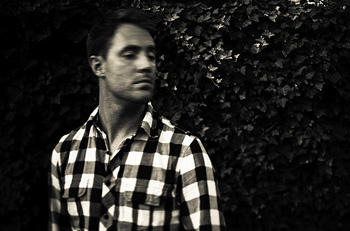
with most folks moving into portland, you moved south to nashville. has that been more beneficial to your career?
"I was born in Bend and grew up in Portland, which I left when I was 17 to go to film conservatory. At that age, leaving is just sort of what you have to do to begin your journey. It's a tough thing, growing up in one of the greatest places on earth. You have to strike out on your own, but I feel like Oregon comprises a massive part of who I am. Whether I was in Brooklyn, and especially now in Nashville, Portland comprises about 75% of who I am. I have no doubts that I will spend the rest of my life in Oregon, it's just a matter of getting back. Currently, my wife is getting her PhD in Neuroscience at Vanderbilt, so we're in Nashville for at least another two years.
"Especially once I really keyed in on cycling, I started to realize how spoiled I was to be in Oregon. I never rode as a kid and now I really wish I had. On top of all that, I'm a life long Blazers fan and I watch every game every season. I would love to live back in Portland and be able to attend as many as I can. I love the idea of taking my kids to games just like my parents took me. The Blazers were an integral part of my childhood."
to those of us not inured to the world of american music culture, nashville spells country music. is that an outdated concept nowadays?
"There is definitely no lack of articles that read along the lines of "Nashville, not just country music...". I can certainly say that Nashville is filled with a ton of incredible, young musicians who have no interest in a career in country. I think anyone who is an intelligent musical mind has a deep appreciation for the "true" country music of Johnny Cash, Willy Nelson, etc. The real issue here in Nashville is BIG country... the Kenny Chesneys if you will. Songs based on a slogan from a t-shirt in a gas station ("God Don't Make No Junk"). There is a massive Christian Contemporary and Country Business (with a capital B) here in town which really has little to nothing to do with any sort of musical density or achievement. It does a disservice to the truer forms of both those genres. It's music written for a certain type of cultural generalization (pick up trucks, youth rallies, etc) rather than to truly add something to the artistic canon of music.
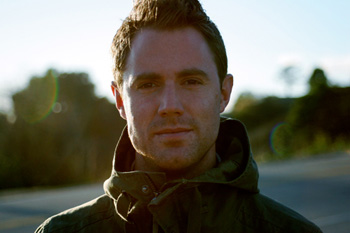 "All that being said, there are a bunch of big and diverse groups of people moving into town and working hard in town to do the exact opposite of that. Just like any great big city, there is a great bike scene where people are playing these tiny house shows and everyone is loving it. There are also people who are maybe aiming for something a little bigger, but doing it with a real diligent attention to quality and detail."
i read somewhere that 'nothing shows' is based on a book of poetry. do you need an external stimulus such as this to produce your music?
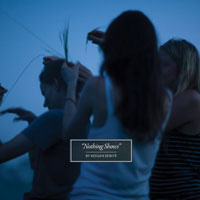
"A lot of "Nothing Shows" was steeped in the work of Philip Larkin. Lyric-writing is certainly the toughest piece of the process for me. It's also the easiest step to cheat. Lots of people do, and I've done some cheating myself. There's a reason why poets are lauded throughout history, it's a true artform, and very similar to chiseling out a bust from a giant piece of stone. It's tedious, it's super detail-oriented, and it's constantly revealing itself. I like to take from still photos or poetry a lot of time, to spark abstract things in my brain or in my heart. It'll get me headed in a direction. I try to do a lot of talking with the music itself, and then it's like adding another, even more dense and specific layer on top. This can be tough when you're so thoroughly ensconced in the music itself. Outside influences help that."
in which case, what was the stimulus for the rapha continental score: visuals or concept?
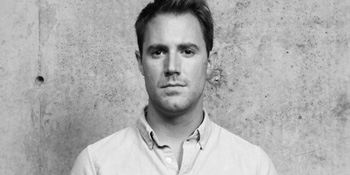
"Rapha was easy and fun in that I love what they do. I think I really connect with their aesthetic and how they appreciate cycling. I think that's how I get that, in cycling, especially when you're doing it for the real LOVE of it, there are great moments of serenity, along with moments of tension or torment or determination and grit. I can really identify with those things easily because they are the drive for my riding. On top of that, I'm a fan, I watch the films they make, I wear their clothes, I appreciate their site.
"Scoring is tough if you don't love the creators or the subject 100%. That wasn't the case with Rapha."
have you and droptree collaborated previously?
"Matt Miadich at Droptree reached out to me and it was a strange coincidence. We actually went to high school briefly in Porland; very briefly. I ended up attending a fine arts school in the city after the first semester of high school. So it was a name from the very distant past. I was a big fan of his wife and her business in Portland as well. He reached out and it was sorta like getting offered your dream job. I had always loved Rapha, loved the site, loved the videos. That's one great thing about my career so far, I've gotten to meld a lot of my loves into my career. I left film conservatory, but I get to score films. Cycling is a massive part of my life, and now I get to play a part in that as well."
even a cursory glance at your website puts you in the 'prolific' category. do you find it easy to compose to order?
"Well, a lot of the score stuff is from early on. My idea then was, score whatever you can; get good. I just enjoyed the process so much that there was a lot of material early on. Now I try to be much more selective. That being said, I've been lucky in that, lately, the quality of the projects has been tough to turn down. This last year, since Cold Weather, I've done four or five things... so maybe you're right haha."
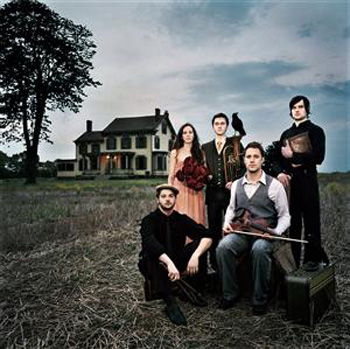 "The truth is, in my mind, until you're making the money that really allows you to say "I'm a musician, I can live comfortably", you should be working your tail off. Right now is an exciting time, but income is always an issue. I would honestly love to have a score that paid me enough where all I did for six months was work on solely that. Revise, add, edit, truly pay detailed attention and love to one thing. Sadly, that's tough to come by regularly during the younger years of a composing career. So, in the meantime, you work as hard as you can, create as much quality work as you can, and hope that gets you somewhere."
do you think you have a recognisable style?
I'd hope so. Or more specifically, a recognizable approach. That approach being, tastefulness. Using your means as effectively as possible. Allowing space to work in your favor. Trying to add "vibration" to pre-existing themes and emotions rather than making the music be the drama. I don't know, that is a deep dark world of intentions that would be a long answer haha. Influences go a long way to informing that perhaps. Michael Nyman, Riuichi Sakamoto, Dario Marianelli, Alexandre Desplat."
are you a confident producer, or do you prefer to rely on a third party?
"For my score work, I play and produce everything for the most part. There are some selective things that I may need an outside player to do, but I can pretty much take care of everything. That's pretty critical to the process. It allows me to add stuff, remove stuff, improvise, etc. I have to be able to work that way with scores."
were rapha consulted over the 'continental' score or did droptree present it as a 'fait accompli'?
"Me and Matt Miadich had communication about it. I think we were both so on the same page that it made it pretty easy, there weren't any revisions I don't think. We really understand each other's aesthetic I think and that's in line with Rapha. I also have gotten pretty good at giving people more than they need. If people grab the scores off my website, they'll see that there are usually five or more cues that they won't find in the work itself."
how long did this particular project take start to finish?
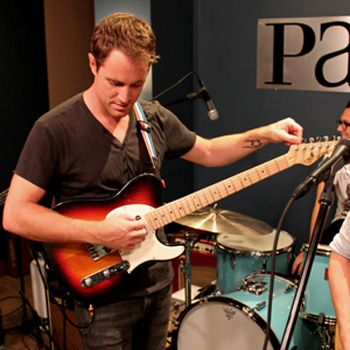
"Tough to say, maybe two-three weeks? That's misleading though in that I write in day-long spurts often. Over that period, I probably wrote everything in five-six day long pushes where I'll write two to three cues, each with a couple of variations."
on replying to my request for an interview, you said you were 'slammed'. from where does the bulk of your work come?
"I'm slammed in that we just got home from the amazing Daytrotter Barnstormer tour, then I get married, go on a honeymoon, come back and go out on the road again for a Northeast tour. On top of all that, I'll write a couple score selections and finish writing the new record."
"I think it's important for a couple of reasons. The obvious one is that it allows me to grow my email list and inform people about all the projects I'm working on. Most importantly though, it really allows the music to be heard and to mean something to people."
there's some delightful strings accompaniment on 'nothing shows'. did you score those too?
"Those were a mix of me and an arranger from Nashville named Eleonor Denig. Her work is the truly impressive stuff on there, most notably "Michel Bizot".
do you have your own studio in which your output is recorded, or are local commercial studios employed?
"I do all of my score work out of my home-studio. The volume of the work and my necessity to improvise, revise and work on the fly would make real studio time pretty expensive. Also, I have a whole environment set up where I can pick up one thing, then another, then another. I need to be able to work as quickly as possible to make sure I don't let there be any slack in my inspiration. That way I can just keep experimenting. As soon as you get into a formal studio, a lot of the ability to think and work that freely goes away, unless you have a massive budget and can just camp out for a long time."
i'd find it hard to believe that someone from portland isn't a born and bred cyclist. would you regard yourself as such?
"Like I was saying, cycling is something I came to only once I moved away. It wasn't until I was in New York that I really started to get into cycling. I actually started to get into the sport itself first, watching Lance win his last tour, then Landis and so on. Once I left New York and came to Nashville, I bought my first real bike and was instantly addicted. I had been a really avid runner in New York because it gave me a way to get out and explore the city every night. But I burnt out on running, and coming to Nashville and getting a nice bike opened up a whole new world for me."
i see from your site that you'll be touring in june. is this a solo tour, or do you have an accompanying band?
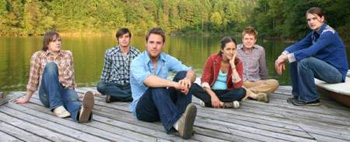
"We only play as a full band now. We've really made a concerted effort to get away from the singer-songwriter setup. I hated it and I feel like the world doesn't need more white, male singer songwriters, especially in Nashville. The band allows us to do so much more."
any prospect of gigs in the uk, or is that currently an ocean too far?
"I usually make it over to the UK and Paris in the fall. I've done it for the last two years at least. This year I did a month long residency in Paris with a show in London, which was great."
keegan dewitt | rapha continental movies | droptree productions
 ..........................................................................................................................................................................................................